2 Chapter 2 – Ethics, Corporate Responsibility and Sustainability

Exhibit 2.1 (Credit: Marco Verch /flickr / Attribution 2.0 Generic (CC BY 2.0))
Introduction
Learning Objectives
After reading this chapter, you should be able to answer these questions:
- What are ethics and business ethics?
- What are major ethical principles that can guide individuals and organizations?
- Why is ethical leadership important in organizations?
- What are differences between values-based ethics and compliance in organizations?
- What purpose can CSR (corporate social responsibility) offer to organizations and society?
- What ethical issues do organizations and individuals encounter in the global environment?
- What future near-term forecasts will affect ethical and corporate conduct of organizations?
Exploring Managerial Careers
Playing with a Purpose at Hasbro
Hasbro is a global play and entertainment company that takes corporate social responsibility (CSR) very seriously. Founded nearly a century ago in Rhode Island, Hasbro integrates its CSR efforts throughout the organization with the goal of helping to make the world a better place for children of all ages.
In 2017, the company achieved the number one spot in the “100 Best Corporate Citizens” rankings, published annually by Corporate Responsibility magazine. Hasbro is no stranger to this achievement; over the past five years Hasbro has consistently been in the top five spots on this prestigious list—and that is no accident.
With more than 5,000 employees, Hasbro relies heavily on its strategic brand blueprint to guide its efforts in CSR, innovation, philanthropy, and product development. With a business portfolio that includes such well-known brands as Nerf, Play-Doh, Transformers, Monopoly, and The Game of Life, the company focuses its CSR efforts on four key areas: product safety, environmental sustainability, human rights and ethical sourcing, and community.
According to the company, product safety is its highest priority. Hasbro uses a five-step quality assurance process that starts with design and then moves to engineering, manufacturing, and packaging. Another key part of product safety at Hasbro is incorporating continuous feedback from both consumers and retailers and insisting that these high standards and quality processes apply to all third-party factories worldwide that manufacture its products.
Hasbro is also committed to finding new ways to reduce its environmental footprint. Over the past several years, the company has reduced energy consumption, cut greenhouse gas emissions, and reduced water consumption and waste production in its production facilities. In addition, Hasbro has totally eliminated the use of wire ties in all of its product packaging, saving more than 34,000 miles of wire tires—more than enough to wrap around the earth’s circumference.
Human rights and ethical sourcing remain a key ingredient of Hasbro’s CSR success. Treating people fairly is a core company value, as well as working diligently to make great strides in diversity and inclusion at all levels of the organization. Company personnel work closely with third-party factories to ensure that the human rights of all workers in the Hasbro global supply chain are recognized and upheld.
Philanthropy, corporate giving, and employee volunteering are key components of the Hasbro community. Through its various charitable programs, Hasbro made close to $15 million in financial contributions and product donations in 2016, which reached close to an estimated 4 million children around the globe. Several years ago, the company started an annual Global Day of Joy as a way of engaging its employees worldwide in community service. In a recent year, more than 93 percent of Hasbro’s employees participated in service projects in more than 40 countries.
Hasbro is in the business of storytelling, and its CSR efforts tell the story of an ethical, responsible organization whose mission is to “create the world’s best play experiences.” Its ability to be accountable for its actions and to help make the world a better place one experience at time continues to make it a highly successful company.
Sources: Brian Goldner, “Who Are You Really?—Brian Goldner, President & CEO for Hasbro, Inc.,” http://insights.ethisphere.com, accessed June 29, 2017; “CSR Fact Sheet,” https://csr.hasbro.com, accessed June 23, 2017; “The World’s Biggest Public Companies: Hasbro,” Forbes, https://www.forbes.com, accessed June 23, 2017; “2016 Global Philanthropy & Social Impact,” https://csr.hasbro.com, accessed June 23, 2017; Elizabeth Gurdus, “Hasbro CEO Reveals the Magic Behind the Toymaker’s Earnings Beat,” CNBC, http://www.cnbc.com, April 24, 2017; Jade Burke, “Hasbro Reaches Top spot in CSR Listing,” Toy News, http://www.toynews-online.biz, April 21, 2017; Kathrin Belliveau, “CSR at Hasbro: What It Means to Play with Purpose,” LinkedIn, https://www.linkedin.com, April 20, 2017.
This chapter will examine the role of ethics and how it affects organizations. Ethics is examined at the individual level, the organizational level, and also examines the role of ethics and leadership. Corporate social responsibility and how it is different than compliance will also be examined. Finally, ethics around the globe and in different cultures and the emerging issues regarding corporate social responsibility and ethics will be discussed.
2.1 Ethics and Business Ethics Defined
- What are ethics and business ethics?
Ethics essentially involves how we act, live, lead our lives, and treat others. Our choices and decision-making processes and our moral principles and values that govern our behaviors regarding what is right and wrong are also part of ethics.1
Normative ethics refers to the field of ethics concerned with our asking how should and ought we live and act? Business ethics is applied ethics that focuses on real-world situations and the context and environment in which transactions occur—How should we apply our values to the way we conduct business?
Ethics and business ethics continue to gain influence in corporations, universities, and colleges nationally and internationally. No longer considered a luxury but a necessity, business ethics has awakened a need in the public consciousness due to crises in many areas. For example, the 2008 subprime lending crisis—economic effects of which still persist—revealed widespread corruption of large investment banks and lending institutions internationally. Unsupported mortgages were fraudulently offered with no legitimate financial backing. Some large financial institutions, such as Lehman Brothers Holdings, Inc., went bankrupt; millions of mortgage holders lost their homes. An estimated cost of that crisis to the global economy is over $22 trillion U.S. dollars.2
In the early 2000s, CEOs and top-level leaders from notable corporations such as Enron, Tyco, WorldCom, and others were caught committing outrageously greedy and fraudulent crimes of white-collar theft from their organizations and shareholders. The now classic film The Smartest Guys in the Room depict how Enron’s leaders during that time, Kenneth Lay (now deceased), Jeff Skilling (still serving prison time), and Andrew Fastow (released from prison in 2011), deceived employees, Wall Street, and shareholders. Enron’s crisis took an estimated $67 billion of shareholder wealth out of the U.S. economy.3 These criminal activities ushered in national laws such as the Sarbanes-Oxley Act, which we discuss below.
While these recent historical crises illustrate the continuing relevance and importance of business ethics, ethical issues are not only concerned with financial and economically motivated crimes and misbehaviors. Fast forward to the rise of artificial intelligence (AI), which also is calling attention to the relevance and need for ethics in scientific institutions, businesses, and governments. The public needs to be informed of potential and actual harmful consequences—as well as all the recognizable benefits—of these technologies that are in large part driven by algorithms (“a sequence of instructions telling a computer what to do”).4 Intentional and unintentional misuses of such designs embedded in artificially intelligent technologies can negatively and harmfully affect individual lives as well as entire societies. For example, studies show that a number of minority members of society are often discriminated against by institutions using faulty algorithms to qualify customers for mortgages and to predict who is at risk of being incarcerated. Often times, racial and low-income minorities are discriminated against by such technology designs.5
At a societal level, another now classic film, The Minority Report, illustrates how misuses of technology can threaten individual rights, privacy, free will, and choice. While this may sound like science fiction, scientific and business luminaries such as Elon Musk, Stephen Hawking, Bill Gates, and others have openly declared that we as a society must be cautious and ethically aware and active to fend off the ill effects of the control and dominant influences of certain AI algorithms in our lives. Scientific and ethical practices in corporate social responsibility (CSR) are one way that ethicists, business leaders, and consumers can support moral self-regulation of technologies. Some scientific and technological firms have adopted ethics boards to help safeguard against harmful social uses of AI technologies.6 The European Union (EU) has produced policy studies that are forerunners of laws to safeguard against potentially harmful uses of robotics.7
Another timely ethical issue is climate change and the environment. Lack of sustainable environmental practices that curb air pollution and destructive uses of land, water, and natural resources have, according to a large community of reputable scientists, threatened Earth’s—and our neighborhoods’—atmosphere.8 Scientific studies and United Nations reports affirm that changes to the earth’s atmosphere, melting glaciers, and rising seas are occurring at accelerated rates. For example, “California’s coastline could rise up to 10 feet by 2100, about 30 to 40 times faster than sea-level rise experienced over the last century.”9 While university, business, and local community groups are rallying for legal actions to curtail and reverse environmental polluters, current political executive orders push against such regulations designed to protect against further erosion of the physical environment.10 The point here is that as these issues described above are not only technological, economic, and political in nature, but also moral and ethical, as the public’s health, welfare, and safety are at risk.
Relevant ethical questions can be asked to prevent a crisis: Who is responsible for preventing and addressing what happens to individuals, the public, our institutions, and government and who is responsible for preventing such crises and harmful effects from occurring and reoccurring? At whose and what costs? Whose responsibility is it to protect and preserve the common good of societies? What ethical and moral principles should and can motivate individuals, groups, and society members to act to change course?
In this chapter, we begin by presenting an overview of the dimensions of business ethics at the individual, professional, and leadership levels, followed by the organizational, societal, and global levels.
Concept Check
- What individual and organizational ethical issues can we expect to occur?
- What are some signs of unethical activities you might notice individually and organizationally?
2.2 Ethical Principles and Responsible Decision-Making
- What are major ethical principles that can be used by individuals and organizations?
Before turning to organizational and systems levels of ethics, it’s worth discussing how our decision making changes over time and with different situations.
Lawrence Kohlberg was a prominent American psychologist best known for his groundbreaking work on moral development. Expanding on Jean Piaget’s theories, Kohlberg proposed that moral reasoning develops through a series of structured stages, grouped into three distinct levels: pre-conventional, conventional, and post-conventional. Each stage reflects a different way individuals justify right and wrong, evolving from basic obedience and self-interest to a more principled understanding based on universal ethical standards. His theory has become a cornerstone in both psychology and education, offering valuable insights into how people make ethical decisions across personal, social, and professional contexts.
Kohlberg’s theory of moral development is a powerful lens for understanding how individuals—especially business leaders and employees—navigate ethical decisions in the workplace. At its core, the theory suggests that people make moral choices based on different levels of reasoning, from obeying rules to upholding personal ethical principles.
In a business context:
Pre-conventional thinking might drive someone to follow rules simply to avoid punishment—like adhering to safety protocols only because of fear of disciplinary action.
Conventional reasoning is more common: decisions are made based on company norms, loyalty to the team, or the desire to maintain a positive public image.
Post-conventional thinking comes into play when individuals question the status quo and advocate for ethical reforms, diversity, or sustainability—even if those views challenge current policies.
By recognizing which stage someone is operating from, organizations can better understand motivations behind decisions, tailor their leadership strategies, and foster cultures that encourage ethical growth. It’s especially useful in ethics training, conflict resolution, and building socially responsible practices.
Approaches to Decision Making
We discuss classical ethical principles that are very relevant now and on which decisions can be and are made by individuals, organizations, and other stakeholders who choose principled, responsible ways of acting toward others.17
Ethical principles are different from values in that the former are considered as rules that are more permanent, universal, and unchanging, whereas values are subjective, even personal, and can change with time. Principles help inform and influence values. Some of the principles presented here date back to Plato, Socrates, and even earlier to ancient religious groups. These principles can be, and are, used in combination; different principles are also used in different situations.18 The principles that we will cover are utilitarianism, universalism, rights/legal, justice, virtue, common good, and ethical relativism approaches.
Using creativity is also important when examining difficult moral decisions when sometimes it may seem that there are two “right” ways to act in a situation or perhaps no way seems morally right, which may also signal that not taking an action at that time may be needed, unless taking no action produces worse results.
Utilitarianism: A Consequentialist, “Ends Justifies Means” Approach
The utilitarianism principle basically holds that an action is morally right if it produces the greatest good for the greatest number of people. An action is morally right if the net benefits over costs are greatest for all affected compared with the net benefits of all other possible choices. This, as with all these principles and approaches, is broad in nature and seemingly rather abstract.
Some limitations of this principle suggest that it does not consider individuals, and there is no agreement on the definition of “good for all concerned.” In addition, it is difficult to measure “costs and benefits.” This is one of the most widely used principles by corporations, institutions, nations, and individuals, given the limitations that accompany it. Use of this principle generally applies when resources are scarce, there is a conflict in priorities, and no clear choice meets everyone’s needs—that is, a zero-sum decision is imminent
Universalism: A Duty-Based Approach
Universalism is a principle that considers the welfare and risks of all parties when considering policy decisions and outcomes. Also, needs of individuals involved in a decision are identified as well as the choices they have and the information they need to protect their welfare. This principle involves taking human beings, their needs, and their values seriously. It is not only a method to make a decision; it is a way of incorporating a humane consideration of and for individuals and groups when deciding a course of action. As some have asked, “What is a human life worth?”
Cooper, Santora, and Sarros wrote, “Universalism is the outward expression of leadership character and is made manifest by respectfulness for others, fairness, cooperativeness, compassion, spiritual respect, and humility.” Corporate leaders in the “World’s Most Ethical Companies” strive to set a “tone at the top” to exemplify and embody universal principles in their business practices.19 Howard Schultz, founder of Starbucks; cofounder Jim Sinegal at Costco; Sheryl Sandberg, chief operating officer of Facebook; and Ursula M. Burns, previous chairperson and CEO of Xerox have demonstrated setting effective ethical tones at the top of organizations.
Limitations here also show that using this principle may not always prove realistic or practical in all situations. In addition, using this principle can require sacrifice of human life—that is, giving one’s life to help or save others—which may seem contrary to the principle.
Rights: A Moral and Legal Entitlement–Based Approach
This principle is grounded in both legal and moral rights. Legal rights are entitlements that are limited to a particular legal system and jurisdiction. In the United States, the Constitution and Declaration of Independence are the basis for citizens’ legal rights, for example, the right to life, liberty, and the pursuit of happiness and the right to freedom of speech. Moral (and human) rights, on the other hand, are universal and based on norms in every society, for example, the right not to be enslaved and the right to work.
To get a sense of individual rights in the workplace, log on to one of the “Best Companies to Work For” annual lists (http://fortune.com/best-companies/). Profiles of leaders and organizations’ policies, practices, perks, diversity, compensation, and other statistics regarding employee welfare and benefits can be reviewed. The “World’s Most Ethical Companies” also provides examples of workforce and workplace legal and moral rights. This principle, as with universalism, can always be used when individuals, groups, and nations are involved in decisions that may violate or harm such rights as life, liberty, the pursuit of happiness, and free speech.
Some limitations when using this principle are (1) it can be used to disguise and manipulate selfish and unjust political interests, (2) it is difficult to determine who deserves what when both parties are “right,” and (3) individuals can exaggerate certain entitlements at the expense of others. Still, the U.S. Constitution’s Bill of Rights, ratified in 1791, was designed as and remains the foundation of, which is based on freedom and justice to protect the basic rights of all.
Justice (Equity): Procedures, Compensation, and Retribution
This principle has at least four major components that are based on the tenets that (1) all individuals should be treated equally; (2) justice is served when all persons have equal opportunities and advantages (through their positions and offices) to society’s opportunities and burdens; (3) fair decision practices, procedures, and agreements among parties should be practiced; and (4) punishment is served to someone who has inflicted harm on another, and compensation is given to those for a past harm or injustice committed against them.
A simple way of summarizing this principle when examining a moral dilemma is to ask of a proposed action or decision: (1) Is it fair? (2) Is it right? (3) Who gets hurt? (4) Who has to pay for the consequences? (5) Do I/we want to assume responsibility for the consequences? It is interesting to reflect on how many corporate disasters and crises might have been prevented had the leaders and those involved taken such questions seriously before proceeding with decisions. For example, the following precautionary actions might have prevented the disaster: updating the equipment and machinery that failed in the BP and the Exxon Valdez oil crises and investment banks and lending institutions following rules not to sell subprime mortgages that could not and would not be paid, actions that led to the near collapse of the global economy.
Limitations when using this principle involve the question of who decides who is right and wrong and who has been harmed in complex situations. This is especially the case when facts are not available and there is no objective external jurisdiction of the state or federal government. In addition, we are sometimes faced with the question, “Who has the moral authority to punish to pay compensation to whom?” Still, as with the other principles discussed here, justice stands as a necessary and invaluable building block of democracies and freedom.
Virtue Ethics: Character-Based Virtues
Virtue ethics is based on character traits such as being truthful, practical wisdom, happiness, flourishing, and well-being. It focuses on the type of person we ought to be, not on specific actions that should be taken. Grounded in good character, motives, and core values, the principle is best exemplified by those whose examples show the virtues to be emulated.
Basically, the possessor of good character is moral, acts morally, feels good, is happy, and flourishes. Altruism is also part of character-based virtue ethics. Practical wisdom, however, is often required to be virtuous.
This principle is related to universalism. Many leaders’ character and actions serve as examples of how character-based virtues work. For example, the famous Warren Buffett stands as an icon of good character who demonstrates trustworthy values and practical wisdom. Applying this principle is related to a “quick test” before acting or making a decision by asking, “What would my ‘best self’ do in this situation?” Others ask the question inserting someone they know or honor highly.
There are some limitations to this ethic. First, some individuals may disagree about who is virtuous in different situations and therefore would refuse to use that person’s character as a principle. Also, the issue arises, “Who defines virtuous, especially when a complex act or incident is involved that requires factual information and objective criteria to resolve?”
The Common Good
The common good is defined as “the sum of those conditions of social life which allow social groups and their individual members relatively thorough and ready access to their own fulfillment.” Decision makers must take into consideration the intent as well as the effects of their actions and decisions on the broader society and the common good of the many.20
Identifying and basing decisions on the common good requires us to make goals and take actions that take others, beyond ourselves and our self-interest, into account. Applying the common good principle can also be asked by a simple question: “How will this decision or action affect the broader physical, cultural, and social environment in which I, my family, my friends, and others have to live, breathe, and thrive in now, next week, and beyond?”
A major limitation when using this principle is, “Who determines what the common good is in situations where two or more parties differ over whose interests are violated?” In individualistic and capitalist societies, it is difficult in many cases for individuals to give up their interests and tangible goods for what may not benefit them or may even deprive them.
Individualism: A Self-Interest Approach
Individualism is really not a “principle” to be followed or modeled. It is an orientation that many use quite frequently. Ethical relativism holds that people set their own moral standards for judging their actions. Only the individual’s self-interest and values are relevant for judging his or her behavior. Moreover, moral standards, according to this principle, vary from one culture to another. “When in Rome, do as the Romans do.”
Obvious limitations of individualism include following one’s blind spots or self-interests that can interfere with facts and reality. Followers of this principle can become absolutists and “true believers”—many times believing and following their own ideology and beliefs.
At the individual level, then, principles and values offer a source of stability and self-control while also affecting job satisfaction and performance. At the organizational level, principled and values-based leadership influences cultures that inspire and motivate ethical behavior and performance. The following section discusses how ethical leadership at the top and throughout organizations affects ethical actions and behaviors.21
Concept Check
- What are some ethical guidelines individuals and organizations can use to make ethical choices?
- Can being aware of the actual values you use to guide your actions make a difference in your choices?
2.3 Ethics, Corporate Culture, and Compliance
- What are the differences between values-based ethics and compliance in organizations?
An organization’s culture is defined by the shared values and meanings its members hold in common and that are articulated and practiced by an organization’s leaders. Purpose, embodied in corporate culture, is embedded in and helps define organizations. Ed Schein, one of the most influential experts on culture, also defined organizational corporate culture as “a pattern of shared tacit assumptions learned or developed by a group as it solves its problems of external adaptation and internal integration that have worked well enough to be considered valid and, therefore, to be taught to new members as the correct way to perceive, think, and feel in relation to those problems.”38
As Exhibit 2.2 illustrates, culture plays an important integrating role in organizations both externally and internally. Strategy, structure, people, and systems all are affected by an organization’s culture, which has been referred to as the “glue” that holds an organization together.39
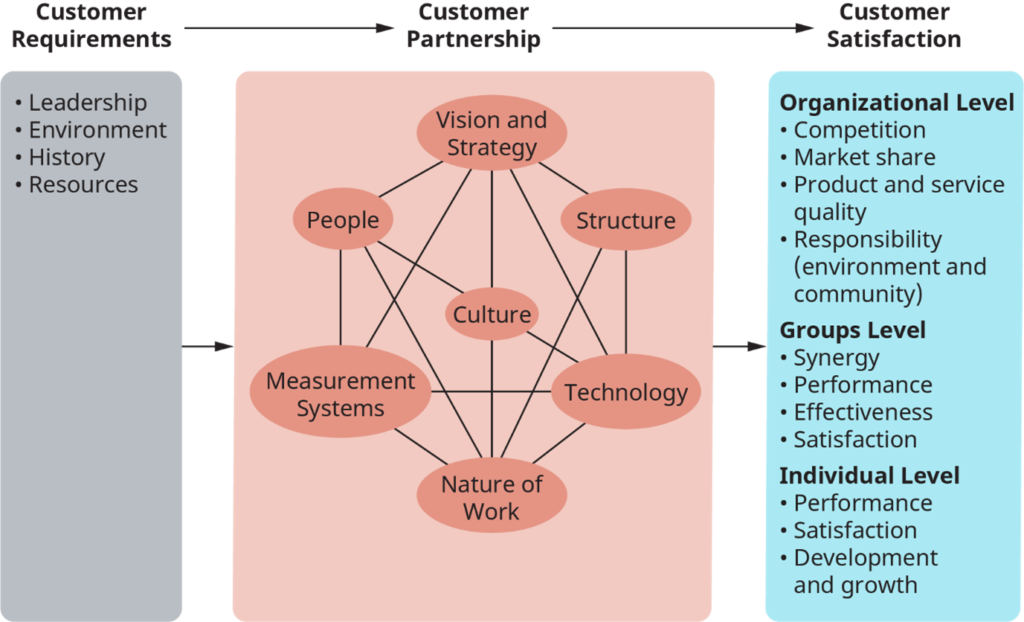
Exhibit 2.2 Role of Culture in Organizational Alignment (Attribution: Copyright Rice University, OpenStax, under CC-BY 4.0 license)
Leadership, in particular, as stated earlier, exerts a powerful influence, along with other factors, on culture. Schein noted that “culture and leadership are two sides of the same coin and one cannot understand one without the other.”40 Culture is transmitted through and by (1) the values and styles that leaders espouse and practice, (2) the heroes and heroines that the company rewards and holds up as models, (3) the rites and symbols that organizations value, and (4) the way that organizational executives and members communicate among themselves and with their stakeholders. Heskett argues that culture “can account for 20–30% of the differential in corporate performance when compared with ‘culturally unremarkable’ competitors.”41
While subcultures develop in organizations, the larger organization’s culture influences these, especially with strong leaders and leadership teams who set the tone at the top and communicate expectations and performance standards throughout. Other factors that indicate and help create a strong ethical culture include the following, which are based on the reputable assessment firm Ethisphere’s experience42
An organization models and communicates compliance standards through its values; employees are informed of and familiar with the assets and efforts of the compliance and ethics function.
The culture sets “enduring and underlying assumptions and norms that determine how things are actually done in the organization.”43
“Organizations can effectively identify specific locations, business units, job levels and job functions that may lack a full understanding of available resources, feel unwanted pressure, or perhaps hold negative perceptions.”
Companies and investors believe a company behaves and acts ethically.
Employees are aware of the conduct, values, and communications of senior leaders.
Employees are engaged and committed, and organizations regularly survey employees to get a sense of their engagement.
Employees feel “less pressure to compromise company standards to achieve company goals. And if they do observe misconduct, they are more likely to feel comfortable reporting it.”
“Employees perceive the ethical priorities of their coworkers, the values of their organization and willingness to share opinions.”44
Compliance and Ethics
As the section above indicates, both a values-based and compliance approach are necessary elements of maintaining an ethical corporate culture. Ethics has been characterized as “doing the right thing” and serving as a motivational force that influences professionals’ values—resembling a “carrot” approach to professionals’ behaviors. Compliance is related to influencing behaviors to act in accordance to the law or face consequences—referred to as a “stick” approach. Studies show that ethical and compliance approaches are interrelated and work best to motivate and sustain lawful and ethical behavior in organizations.45
One law in particular set a new baseline of accountability for CEOs and CFOs (chief financial officers): the federal Sarbanes-Oxley Act of 2002, 2010. This law was the first following the Enron scandal and other corporate scandals that placed constraints and issued punitive measures on CEOs and CFOs who could be punished if they knowingly and willingly committed fraud and other crimes. Several new sections of that law also signaled a change in corporate leaders’ responsibilities and liabilities; for example, the law “[e]stablishes an independent public company accounting board to oversee audits of public companies; requires one member of the audit committee to be an expert in finance; requires full disclosure to stockholders of complex financial transactions: requires CEOs and CFOs to certify in writing the validity of their companies’ financial statements. If they knowingly certify false statements, they can go to prison for 20 years and be fined $5 million; -Prohibits accounting firms from offering other services, like consulting, while also performing audits” (Federal Sentencing Guidelines, 2004). There are other parts of this law that that further establish compliance regulations.46
Because of the widespread corporate scandals discussed at the beginning of the chapter, the U.S. Congress implemented legal and compliance standards to curb and discourage illegal activities in corporations. While self-regulation will always play a major role in corporations’ “doing the right thing,” compliance has proven to be a necessary but not always sufficient element of corporate governance. Ethics continues to complement compliance, especially since the law cannot, does not, and will not cover every aspect of potentially harmful behaviors. Ethical dimensions and practices such as transparency, privacy, honesty, objectivity, integrity, carefulness, openness, respect for intellectual property, civility, confidentiality, accountability, responsible mentoring, and respect for colleagues are all necessary to motivate organizational behavior.
Ethical values become “actionable” in corporations by corporations first becoming aware of and then assuming responsibility for the corporation’s duties toward its stakeholders and stockholders. Social responsibility as a concept originated in 1953 when Howard R. Bowen, known as the “father of corporate social responsibility” (CSR), referred in a book to the “Social Responsibilities of the Businessman.”47
Concept Check
- In what ways do law and compliance complement ethics in organizations?
- How does stakeholder management differ from stockholder management?
2.4 Corporate Social Responsibility (CSR)
- What value do CSR (corporate social responsibility) programs offer to organizations and society?
CSR contributes to another form of self-regulation that goes further and involves firms taking action to help people and the environment. CSR is described as “a belief that corporations have a social responsibility beyond pure profit.” In other words, “Firms are social entities, and so they should play a role in the social issues of the day. They should take seriously their ‘obligations to society’ and actively try to fulfill them.”48 As such, corporations should employ a decision-making process to achieve more than financial success on the assumption that CSR is integral to an optimum long-term strategy.
In the 21st century, sustainability and corporate social responsibility (CSR) have become strategic imperatives for organizations as fundamental market forces for financial viability and success, where consumers are important stakeholders. Businesses worldwide develop CSR initiatives to become better corporate citizens but also to communicate their activity to both internal and external stakeholders, which may involve a number of groups.
A study by Horizon Media’s Finger on the Pulse found that “81 percent of Millennials expect companies to make a public commitment to good corporate citizenship.”49 The 2015 Cone Communications Millennial CSR Study found that “[m]ore than nine-in-10 Millennials would switch brands to one associated with a cause (91% vs. 85% U.S. average), and two-thirds use social media to engage around CSR (66% vs. 53% U.S. average).”50
The 3 P’s (profit, the people, and the planet), or “the triple bottom line” (TBL), is another concept (closely related to and reflective of the mission of CSR and firm activities.51 TBL—also known as 3BL—incorporates and assists businesses measure accountability in their funding of and support for social, environmental (ecological), and financial benefits to allow for a greater good. Many corporations have started to add triple bottom line metrics to their business plans in order to evaluate their overall performance and reflect on how companies are contributing to society. A small sample of contemporary CSR initiatives make a difference. For example:
The GE Foundation gave $88 million to community and educational programs in 2016.
The 3MGives corporation funded $67 million in 2016 to focus on community and the environment, along with educational initiatives boosting student interest in science and technology.
Apple was named by the environmental organization Greenpeace as the “greenest tech company in the world” for over three years because that firm’s packaging is manufactured with 99 percent recycled paper products.
Walt Disney Company’s social mission to strengthen communities states that “by providing hope, happiness, and comfort to kids and families who need it most”. The Walt Disney Company donated more than $400 million to nonprofit organizations in 2016.
Virgin Atlantic’s “Change is in the Air” sustainability initiative states its mission as: “Environment, sustainable design and buying, and community investment.” This firm has since 2007 “reduced total aircraft carbon emissions by 22% and [has] partnered with LanzaTech to develop low carbon fuels for the future. Virgin Holidays donates £200,000 annually to the Brandon Center for Entrepreneurship Caribbean to support young entrepreneurs in Jamaica.”52

Exhibit 2.3 Hasbro Hasbro relies heavily on its strategic brand blueprint to guide its efforts in CSR, innovation, philanthropy, and product development. With a business portfolio that includes such well-known brands as Nerf, Play-Doh, Transformers, and Mr. Potato Head, the company focuses its CSR efforts on four key areas: product safety, environmental sustainability, human rights and ethical sourcing, and community. Here one of its products is featured at the Thanksgiving Day parade in New York City. (Credit: rowenphotography/ flickr/ NoDerivs 2.0 Generic (CC BY-ND 2.0))
While CSR is not a cure-all that can or will significantly make a difference in ushering in more sustainable environmental practices, help alleviate poverty, and use profits to help lower-income communities, it contributes to both internal and external stakeholder awareness to “do the right thing.” For example, Teng and Yazdanifard argue and present evidence that some consumers do take CSR into account while making purchase decision. Also, CSR initiatives and actions have been shown to positively influence both internal and external stakeholders.54 A study conducted in New Zealand explored the perceptions of internal stakeholders of New Zealand companies to discover the way in which the CSR, sustainability cultures, and identity are communicated internally. It was found that employee behaviors matter, as organizations that are well regarded in the community attract greater external loyalty, have more stable revenues, and face fewer crisis risks. A positive relationship with staff in organizations through CSR policies will not only attract better employees, it will also influence the morale, motivation, and loyalty of existing staff. The effective delivery of CSR initiatives also depends on how responsive employees are. If companies wish to achieve legitimacy by operating within a society’s ethical expectations, they must also communicate internally to ensure that CSR activities are integrated into the organizational culture—they cannot “talk the talk” without “walking the walk.”55
So, does CSR benefit the companies that practice such measures? A meta-analysis of 52 studies with a sample size of 33,878 observations suggested that “corporate virtue in the form of social responsibility and, to a lesser extent, environmental responsibility, is likely to pay off. . . . CSP [corporate social performance] appears to be more highly correlated with accounting-based measures of CFP [corporate financial performance] than with market-based indicators”. Many business scholars do believe that some of these relationships are positive.56 Robbins concludes that “[o]n balance, surveys and the research literature suggest that what most executives believe intuitively, that CSR can improve profits. And almost no large public company today would want to be seen unengaged in CSR. That is clear admission of how important CSR might be to their bottom line, no matter how difficult it may be to define CSR and link it to profits.”57
Without exception, the managers articulated the importance of communicating CSR initiatives and policy to their employees, as well as recognizing the need to improve their CSR internal communication strategies. According to the managers, CSR initiatives are promoted to create better corporations and a more ethical business environment.
Stakeholder Management
CSR and stakeholder management are complementary approaches. Stakeholder theory argues that corporations should treat all their constituencies fairly and that doing so can strengthen companies’ reputations, customer relations, and performance in the marketplace.58 “If organizations want to be effective, they will pay attention to all and only those relationships that can affect or be affected by the achievement of the organization’s purposes.”59
The ethical dimension of stakeholder theory is based on the view that profit maximization is constrained by justice, that regard for individual rights should be extended to all constituencies who have a stake in a business, and that organizations are not only “economic” in nature but can also act in socially responsible ways. To this end, companies should act in socially responsible ways, not only because it’s the “right thing to do,” but also to ensure their legitimacy.60
A stakeholder management approach first involves identifying the stakeholders of a company. A stakeholder is any group or individual who can affect or is affected by an organization’s strategies, major transactions, and activities. Stakeholders include employees, suppliers, customers, shareholders, the government, media, and others. An illustration of the stakeholder relationships is provided in Exhibit 2.4. The term stakeholder has become commonplace in organizations. Companies and organizations that base their strategic decisions on the principle of duty to earn stakeholder trust “are likely to yield a number of strategic benefits, too, and can help manage political, social, and reputational risk.”61
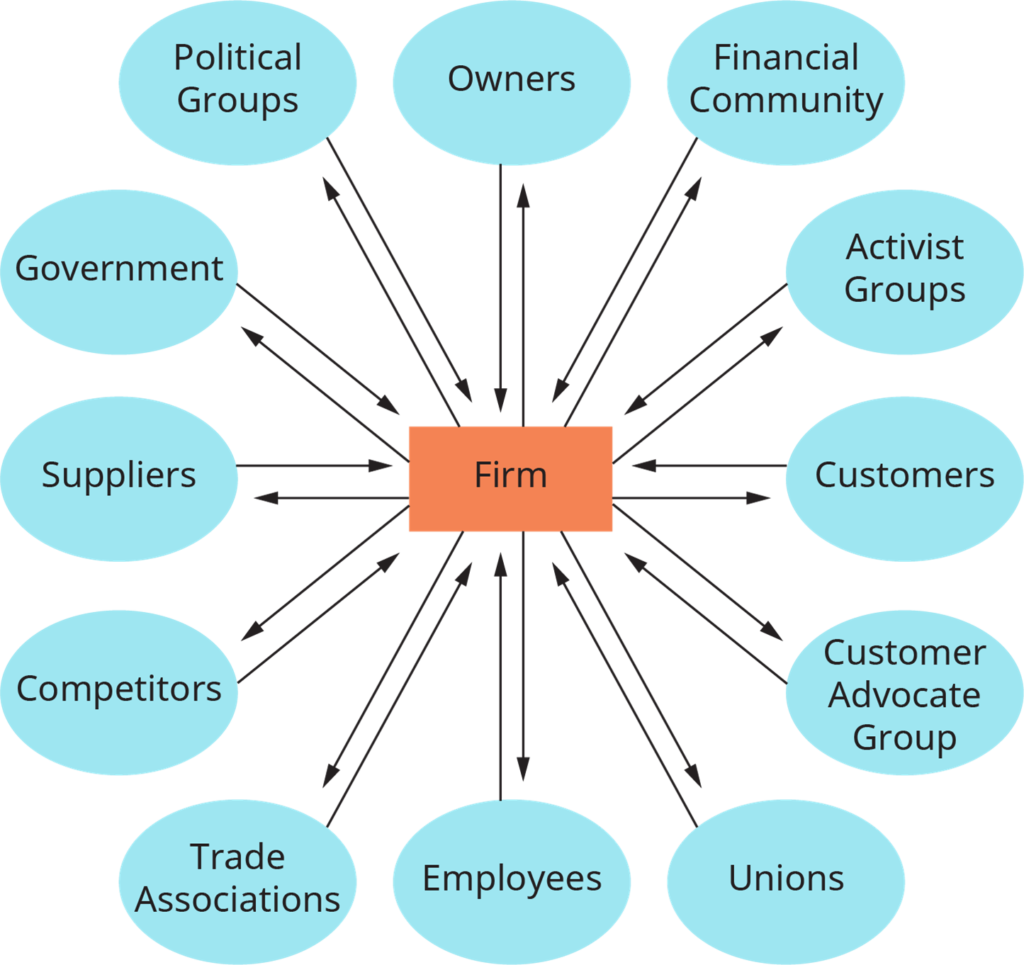
Exhibit 2.4 Stakeholder Map Source: Freeman, R. Edward. (1984). Strategic management: A Stakeholder approach, 25. Boston: Pitman. Reproduced with permission of the author.
Identifying and Influencing Major Stakeholders
There are several methods for analyzing stakeholder transactions and relationships with an organization that go beyond the purpose of this chapter.62 Using an ethical perspective, a goal of this approach is for organizations to employ values of transparency, fairness, and consideration of stakeholder interests in strategic decisions and transactions. Toward that end, the following questions can be used from Exhibit 2.4.
Who are the stakeholders (that is, people who have an interest in supporting or resisting a proposed course of action, resolving an issue, and addressing a change)?
What are their stakes in either supporting or resisting the change?
What do the supporters stand to gain and lose from the change?
What do the resisters stand to gain and lose from the change?
What type(s) of power do the supporters have with regard to the change?
What type(s) of power do the resisters have with regard to the change?
What strategies can we use to keep the support of the supporters?
What strategies can we use to neutralize or win over the resisters?
Based on this approach, an organization’s leaders and officers inform, involve, obtain feedback from, and influence each of their stakeholders with regard to strategy, issues, or opportunities the organization pursues. The Coca-Cola Company uses an ongoing stakeholder approach that is described on this site: https://www.coca-colacompany.com/policies-and-practices/transparency.
CSR and stakeholder management have demonstrated benefits to firms’ reputations and profitability.63 The relationship of an organization’s ethics and social responsibility to its performance concerns both managers and organization scholars. Studies have shown a positive relationship between ethical and socially responsible behavior and financial results. For example, one study of the financial performance of large U.S. corporations that are considered “best corporate citizens” found that they have both superior reputations and superior financial performance.64 Similarly, Governance Metrics International, an independent corporate governance ratings agency, found that the stocks of companies run on more selfless principles perform better than those run in a self-serving manner. Top-ranked companies such as Pfizer, Johnson Controls, and Sunoco also outperformed lower-ranking firms on measures such as return on assets, return on investment, and return on capital.65
Concept Check
- How do sustainable business practices benefit consumers?
- Differentiate the roles compliance and CSR programs serve in organizations. Are these the same, or are there differences? Explain.
Concluding Comments
So, does it pay to be ethical and moral, whether it be entrepreneurs and individuals or corporations and organizations? We have discussed this question in this chapter and presented different arguments with different views. Scholars and ethicists who have debated whether or not corporations can be ethical differ on their responses. One such conference in the INSEAD Business School in France closed with the following statement: “Theoretically, a strong case can be made for the moral responsibility of firms. However, this does not preclude individual moral responsibility for acts as a corporate member. Moreover, it was also evident that considerable concern exists about corporate misconduct going unsanctioned and the possibility that both good and bad corporate behavior is profoundly influenced by the extent to which individuals and corporate entities are held morally responsible.”86
This statement implies that both corporations and individuals bear the possibility and responsibility for unethical—as well as illegal—acts. While corporations are not individuals, people work and relate in corporate and work settings. That is why organizational leaders and cultures play such important roles in setting the tone and boundaries for what is acceptable (ethically and legally) and what is not. Ethical values and legal, compliance codes of conduct together work to prevent and if necessary seek correction and justice for unlawful actions. As noted earlier, promoting and rewarding ethical actions are more desirable and in the long-term more profitable.
Key Terms
business ethics
The area of applied ethics that focuses on real-world situations and the context and environment in which transactions occur.
corporate culture
The beliefs and behaviors that determine how a company’s employees and management interact inside an organization and also handle outside business transactions. Corporate culture develops organically over time from the cumulative traits of the leaders and the people that the company hires.
ethical dilemma
A situation in which a difficult choice has to be made between two courses of action with ethical consequences.
ethical relativism
Holds that people set their own moral standards for judging their actions, based on self-interest.
ethics
The code of moral principles and values that governs the behaviors of a person or group with respect to what is right or wrong.
justice
Four major tenets: (1) All individuals should be treated equally; (2) Justice is served when all persons have equal opportunities and advantages; (3) Fair decision practices, procedures, and agreements among parties should be practiced; (4) Punishment is served to someone who inflicts harm.
rights
Legal rights are entitlements that are limited to a particular legal system and jurisdiction, while moral rights are universal and based on norms in every society.
stakeholder
Any group or individual who can affect or is affected by the achievement of an organization’s objectives. The use of the term stakeholder has become commonplace in organizations.
stakeholder management
The systematic identification, analysis, planning, and implementation of actions designed to engage with stakeholders
virtue ethics
Grounded in one’s character, focusing on what type of person one ought to be.
Summary of Learning Objectives
2.1 Ethics and Business Ethics Defined
What are ethics and business ethics?
A goal of the chapter is to present ethical principles, guidelines, and questions that inform our individual decision-making and influence actions we can take with regard to questionable ethical situations and dilemmas. We also present and illustrate how business leaders, corporations, and organizations internationally have responded and are responding to questionable ethical problems with the environment in their communities through responsible corporate governance and alliance with concerned stakeholders. Ethics is both local and global; it begins with the individual, moves to the organizational, and reaches to international and global levels of societies.
2.2 Ethical Principles and Responsible Decision-Making
What are the major ethical principles that can guide individuals and organizations?
There are many approaches for both individuals and organizations to take with regard to ethical principles. They are utilitarianism; universalism, which is a duty-based approach; a rights approach, which takes a moral and legal approach; justice; virtue; common good; and finally the ethical relativism approach.
2.3 Ethics, Corporate Culture, and Compliance
What are the differences between values-based ethics and compliance in organizations?
A compliance-based ethical approach is simple and direct. It provides a basic integrity to the participant since it is spelled out in clear terms. If the individual or organization exhibits destructive behaviors, their rights can be restricted. An integrity-based ethics code fills the receiver with demands based on the highest expectations.
2.4 Corporate Social Responsibility (CSR)
What value do CSR (corporate social responsibility) programs offer to organizations and society?
Corporate social responsibility is about an organization taking responsibility for the impacts of its decisions and activities on all aspects of society, the community, and the environment. Corporate social responsibility is about contributing to the health and welfare of society and operating transparently and ethically. More importantly, this way of operating should be embedded in the business, rather than an afterthought.
This is heading 4
Chapter Review Questions
- What is the difference between ethics and business ethics?
- What is normative ethics?
- Why are values an important element of ethics for individuals and organizations?
- Can an individual be ethical without using ethical principles described in the chapter? Explain.
- Identify major classical ethical principles.
- Differentiate between the principle of rights and utilitarianism and between justice and universalism.
- Why is leadership important for ethical conduct in corporations?
- What is CSR, and why is it important?
- What is stakeholder management?
- What is the difference between stakeholders and stockholders?
- Does ethics pay? Explain.
Management Skills Application Exercises
What are some advantages and disadvantages of leaders, managers, and employees having and working with a principle-centered approach (using some ethical principles in the chapter) rather than taking a “come what may,” trust in luck, circumstance and chance approach?
What are some principles (from the chapter) that leaders and managers can use to guide their actions in ethical ways?
What can organizational managers and leaders learn with regard to organizational cultures that would inspire and motivate employees to do the right thing in their work?
Describe how a leader, manager, and employee might think and act differently if their organization seriously adopted and practiced doing business with a corporate social responsibility mindset.
Managerial Decision Exercises
One of your direct reports thinks that you are not acting responsibly or in the best interests of the company with him or the department in which you work. The direct report has informed you that your communication and work style are lacking and that this is also causing problems with others in the department. You are upset over this news and realize it could cause you problems with your boss and those above. What would you do, when, why, and how?
You learn that a woman in your department has complained about sexually improper advances toward her by your boss and another more senior person above that boss. You know the woman but not well. She may be right in this instance. You have heard rumors that she often exaggerates and sometimes can’t be trusted. You don’t particularly like her and are concerned about your own reputation if she’s wrong. What would you do and why?
Your department boss wants you to select a few others in your organization to explore adopting corporate social responsibility practices. Some of your friends think that CSR isn’t effective and in fact wastes resources and time of those who get involved. To take on this assignment would require time out of doing your own work. However, you have noticed that your organization’s leadership isn’t all that responsible and responsive to employees and many customers. Maybe adopting more ethical standards and practices could improve business and some of the questionable leaders’ behaviors. What would you do and why?
Critical Thinking Case
Wells Fargo
The Wells Fargo recent crisis over mismanaging customer relationships, fraudulently implementing illegal and unethical sales practices with trusted clients, has cost the company in fines, lost business, and the resignation of the CEO. The following online sources offer a narrative and factual source of what happened, when, to whom, and why. Use these sources (or another reputable source) to answer and provide evidence to the following questions to present to the class:
Critical Thinking Questions
- What were the sources and causes the problems in the first place? Explain.
- Who were some of the primary decision makers that led to the illegal sales activities?
- What were these individuals’ motives and motivations?
- How were the illegal and fraudulent activities discovered?
- Who was to blame?
- What unethical activities occurred before the illegal actions took place?
- What would you have done, if anything, had you been one of the sales professionals pressured to engage in unethical, illegal practices there?
- How would a stakeholder approach, if taken by the company’s top leaders and board of directors, have possibly prevented the crisis?
Sources:
- Comrie, Harley, “Wells Fargo Fake Accounts Scandal”, Seven Pillars Institute, March 15, 2017, http://sevenpillarsinstitute.org/case-studies/wells-fargo-fake-accounts-scandal
- “Wells Fargo Banking Scandal a Financial crisis We Can Finally Understand”, The Guardian, accessed January 2, 2019, https://www.theguardian.com/business/us-money-blog/2016/oct/07/wells-fargo-banking-scandal-financial-crisis;
- Glazer, Emily, “Wells Fargo’s Textbook Case of Botched Crisis Management”, The Wall Street Journal, October 13, 2017, https://www.wsj.com/articles/wells-fargos-textbook-case-of-how-not-to-handle-a-crisis-1476380576.
Chapter Attributions:
Principles of Management by Bright, D. S., Cortes, A. H., Hartmann, E., Parboteeah, K. P., Pierce, J. L., Reece, M., Shah, A., Terjesen, S., Weiss, J., White, M. A., Gardner, D. G., Lambert, J., Leduc, L. M., Leopold, J., Muldoon, J., & O’Rourke, J. S. Available at OpenStax and licensed under CC BY 4.0.