10 Chapter 10 – Managing Teams

Exhibit 10.1 (Credit: MabelAmber/ Pixabay/ (CC BY 0))
Introduction
Learning Objectives
After reading this chapter, you should be able to answer these questions:
- What is the benefit of working in teams, and what makes teams effective?
- How do teams develop over time?
- What are some key considerations in managing teams?
- What are the benefits of conflict for a team?
- How does team diversity enhance decision-making and problem-solving?
- What are some challenges and best practices for managing and working with multicultural teams?
Exploring Managerial Careers
Eva Hartmann, Trellis LLC
Eva Hartmann has nearly 20 years of experience as a strategic, results-driven, innovative leader with significant expertise in human resources strategy, talent and leadership development, and organizational effectiveness. She has worked in a variety of industries, from manufacturing to Fortune 500 consulting. Eva is a transformational change agent who has developed and led strategic human capital programs and talent initiatives in multiple challenging environments globally. Eva is passionate about enhancing both individual and organizational performance.
Eva began her career in one of the large “Big 6” management consulting firms at the time, and she happily returned several years ago to consulting. She is the founder and president of Trellis LLC, a human capital consulting and staffing firm in Richmond, Virginia.
Prior to Trellis, Eva was the global human resources leader for a large global manufacturer of plastic film products and was responsible for the HR strategy and operations of a $600 million global division. In this role, Eva led a global team of HR managers in North and South America, Europe, and Asia to support global HR initiatives to drive business results and build human capital and performance across the division.
Eva has also held a variety of leadership and managerial roles in both human resources and quality functions at several nationally and globally recognized companies, including Wachovia Securities, Genworth Financial, Sun Microsystems, and Andersen Consulting (now Accenture).
Eva holds an MBA from the College of William and Mary in Williamsburg, Virginia, and a BA in anthropology from the University of Virginia in Charlottesville, Virginia. She is also an adjunct faculty member with the University of Richmond Robins School of Business. Eva currently serves on the board of the Society of Human Resource Management (SHRM) of Richmond, Virginia.
Much of the work that is performed today in organizations requires a focus on teamwork. The ability to work successfully as a team member, as well as the ability to lead teams, is an ultimate advantage within the workforce. Teams themselves must be managed, in addition to managing just the individuals, to be successful. We’ve all heard the quote originally coined by Aristotle that states that “the whole is greater than the sum of its parts.” This captures the nature of the team perfectly—there is such a synergy that comes from a team that the individuals alone are not able to create. This chapter details the importance of and benefits that you may derive from working as a team, as well as some of the ways we can make our teams more successful.
10.1 Teamwork in the Workplace
- What is a team, and what makes a team effective?
Teamwork has never been more important in organizations than it is today. Whether you work in a manufacturing environment and utilize self-directed work teams, or if you work in the “knowledge economy” and derive benefits from collaboration within a team structure, you are harnessing the power of a team.
A team, according to Katzenbach and Smith in their Harvard Business Review (HBR) article “The Discipline of Teams,” is defined as “people organized to function cooperatively as a group”.1 The five elements that make teams function are:
Common commitment and purpose
Specific performance goals
Complementary skills
Commitment to how the work gets done
Mutual accountability
A team has a specific purpose that it delivers on, has shared leadership roles, and has both individual and mutual accountabilities. Teams discuss, make decisions, and perform real work together, and they measure their performance by assessing their collective work products. This is very different from the classic working group in an organization (usually organized by functional area) in which there is a focused leader, individual accountabilities and work products, and a group purpose that is the same as the broader organizational mission. Think of the finance organization or a particular business unit in your company—these are, in effect, larger working groups that take on a piece of the broader organizational mission. They are organized under a leader, and their effectiveness is measured by its influence on others within the business (e.g., financial performance of the business.)

Exhibit 10.2 Finance Working Group Smart managers understand that not all of a company’s influential relationships appear as part of the organization chart. Consider a publishing company that might have a lead finance head for each group, such as adult fiction, nonfiction, young adult, and children’s book divisions. A finance team working group would help spread best practices and lead to more cohesive operations for the entire organization. (Credit: thetaxhaven /flickr / Attribution 2.0 Generic (CC BY 2.0))
So, what makes a team truly effective? According to Katzenbach and Smith’s “Discipline of Teams,” there are several practices that the authors have observed in successful teams. These practices include:
- Establish urgency, demanding performance standards, and direction. – Teams work best when they have a compelling reason for being, and it is thus more likely that the teams will be successful and live up to performance expectations. We’ve all seen the teams that are brought together to address an “important initiative” for the company, but without clear direction and a truly compelling reason to exist, the team will lose momentum and wither.
- Select members for their skill and skill potential, not for their personality. – This is not always as easy as it sounds for several reasons. First, most people would prefer to have those with good personalities and positive attitudes on their team in order to promote a pleasant work environment. This is fine, but make sure that those individuals have the skill sets needed (or the potential to acquire/learn) for their piece of the project. The second caveat here is that you don’t always know what skills you need on a project until you really dig in and see what’s going on. Spend some time up front thinking about the purpose of the project and the anticipated deliverables you will be producing, and think through the specific types of skills you’ll need on the team.
- Pay particular attention to first meetings and actions. – This is one way of saying that first impressions mean a lot—and it is just as important for teams as for individuals. Teams will interact with everyone from functional subject-matter experts all the way to senior leadership, and the team must look competent and be perceived as competent. Keeping an eye on your team’s level of emotional intelligence is very important and will enhance your team’s reputation and ability to navigate stakeholders within the organization.
- Set some clear rules of behavior. – It is so critical that the team takes the time up front to capture their own rules of the road in order to keep the team in check. Rules that address areas such as attendance, discussion, confidentiality, project approach, and conflict are key to keeping team members aligned and engaged appropriately.
- Set and seize upon a few immediate performance-oriented tasks and goals. – What does this mean? Have some quick wins that make the team feel that they’re really accomplishing something and working together well. This is very important to the team’s confidence, as well as just getting into the practices of working as a team. Success in the larger tasks will come soon enough, as the larger tasks are really just a group of smaller tasks that fit together to produce a larger deliverable.
- Challenge the group regularly with fresh facts and information. – That is, continue to research and gather information to confirm or challenge what you know about your project. Don’t assume that all the facts are static and that you received them at the beginning of the project. Often, you don’t know what you don’t know until you dig in. I think that the pace of change is so great in the world today that new information is always presenting itself and must be considered in the overall context of the project.
- Spend lots of time together. – Here’s an obvious one that is often overlooked. People are so busy that they forget that an important part of the team process is to spend time together, think together, and bond. Time in person, time on the phone, time in meetings—all of it counts and helps to build camaraderie and trust.
- Exploit the power of positive feedback, recognition, and reward. – Positive reinforcement is a motivator that will help the members of the team feel more comfortable contributing. It will also reinforce the behaviors and expectations that you’re driving within the team. Although there are many extrinsic rewards that can serve as motivators, a successful team begins to feel that its own success and performance is the most rewarding.
Collaboration is another key concept and method by which teams can work together very successfully. Bringing together a team of experts from across the business would seem to be a best practice in any situation.
As teams grow in size and complexity, the standard practices that worked well with small teams don’t work anymore. Organizations need to think about how to make collaboration work, and they should leverage the above best practices to build relationships and trust.
Concept Check
- What is the definition of a team?
- Name some practices that can make a team more successful.
10.2 Team Development Over Time
- How do teams develop over time?
If you have been a part of a team—as most of us have—then you intuitively have felt that there are different “stages” of team development. Teams and team members often start from a position of friendliness and excitement about a project or endeavor, but the mood can sour and the team dynamics can go south very quickly once the real work begins. In 1965, educational psychologist Bruce Tuckman at Ohio State University developed a four-stage model to explain the complexities that he had witnessed in team development. The original model was called Tuckman’s Stages of Group Development, and he added the fifth stage of “Adjourning” in 1977 to explain the disbanding of a team at the end of a project. The four stages of the Tuckman model are:3
Forming
Storming
Norming
Performing
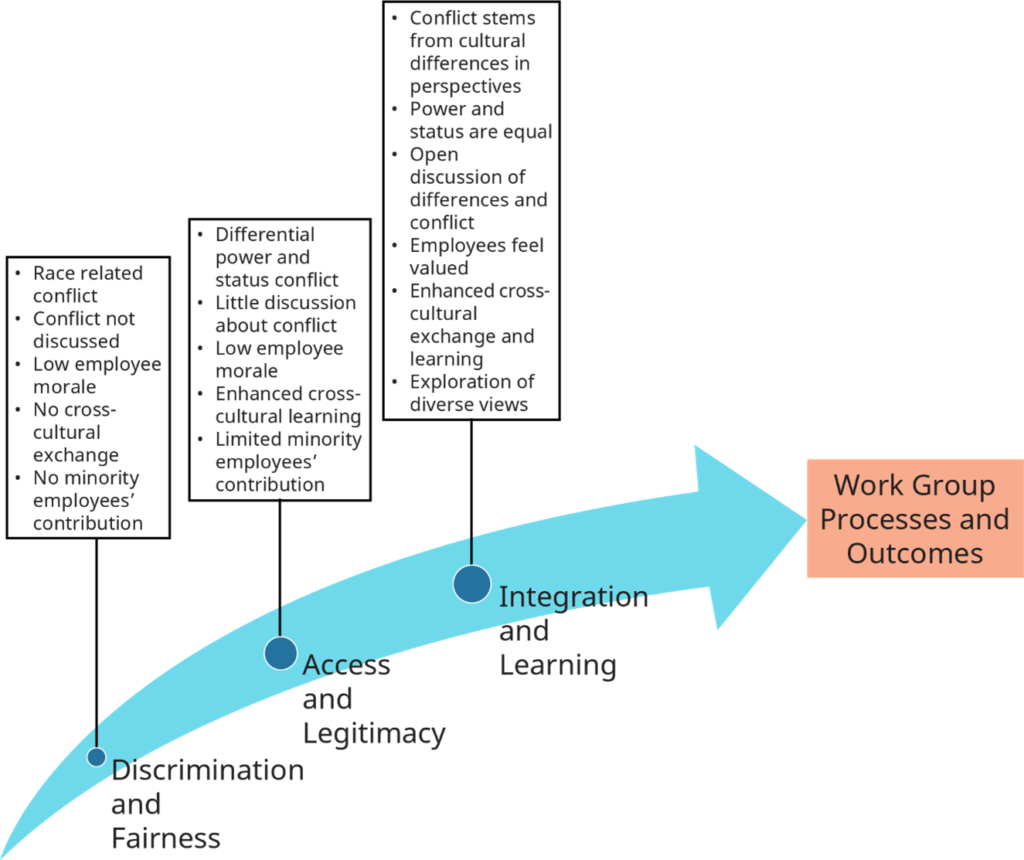
Exhibit 10.3 Tuckman’s Model of Team Development Attribution: Copyright Rice University, OpenStax, under CC BY-NC-SA 4.0 license
The Forming stage begins with the introduction of team members. This is known as the “polite stage” in which the team is mainly focused on similarities and the group looks to the leader for structure and direction. The team members at this point are enthusiastic, and issues are still being discussed on a global, ambiguous level. This is when the informal pecking order begins to develop, but the team is still friendly.
The Storming stage begins as team members begin vying for leadership and testing the group processes. This is known as the “win-lose” stage, as members clash for control of the group and people begin to choose sides. The attitude about the team and the project begins to shift to negative, and there is frustration around goals, tasks, and progress.

Exhibit 10.4 The Storming Stage In the storming stage, protracted competition vying for leadership of the group can hinder progress. You are likely to encounter this in your coursework when a group assignment requires forming a team. (Credit: Gerald R. Ford School of Public Policy/ flickr/ Attribution 2.0 Generic (CC BY 2.0))
After what can be a very long and painful Storming process for the team, slowly the Norming stage may start to take root. During Norming, the team is starting to work well together, and buy-in to group goals occurs. The team is establishing and maintaining ground rules and boundaries, and there is willingness to share responsibility and control. At this point in the team formation, members begin to value and respect each other and their contributions.
As the team builds momentum and starts to get results, it is entering the Performing stage. The team is completely self-directed and requires little management direction. The team has confidence, pride, and enthusiasm, and there is a congruence of vision, team, and self. As the team continues to perform, it may even succeed in becoming a high-performing team. High-performing teams have optimized both task and people relationships—they are maximizing performance and team effectiveness. Katzenberg and Smith, in their study of teams, have created a “team performance curve” that graphs the journey of a team from a working group to a high-performing team. The team performance curve is illustrated in Exhibit 10.5.
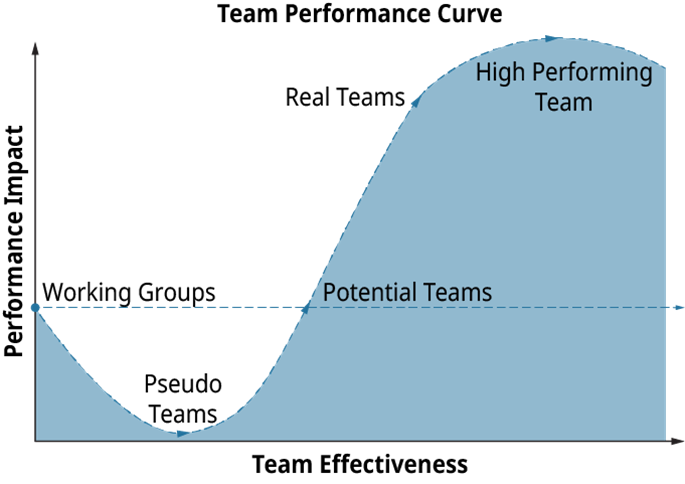
Exhibit 10.5 Team Performance Curve (Attribution: Copyright Rice University, OpenStax, under CC-BY 4.0 license)
The process of becoming a high-performance team is not a linear process. Similarly, the four stages of team development in the Tuckman model are not linear, and there are also factors that may cause the team to regress to an earlier stage of development. When a team member is added to the group, this may change the dynamic enough and be disruptive enough to cause a backwards slide to an earlier stage. Similarly, if a new project task is introduced that causes confusion or anxiety for the group, then this may also cause a backwards slide to an earlier stage of development. Think of your own experiences with project teams and the backslide that the group may have taken when another team member was introduced. You may have personally found the same to be true when a leader or project sponsor changes the scope or adds a new project task. The team has to re-group and will likely re-Storm and re-Form before getting back to Performing as a team.
It’s worth mentioning that there is a fifth stage for groups and team that disband, Adjourning. In the adjourning stage, most of the team’s goals have been accomplished. The emphasis is on wrapping up final tasks and documenting the effort and results. As the work load is diminished, individual members may be reassigned to other teams, and the team disbands. Not all teams stay together long term. Consider the group of students you worked with on a class project. You won’t be checking in 5 years from now, or even next semester to monitor progress. This team was temporary for a task, a project team, so once the task was completed, the team adjourns or disbands. If the team is a standing committee with ongoing responsibility, members may be replaced by new people and the team can go back to a forming or storming stage and repeat the development process. Adjourning may also occur in the event the team was unsuccessful in the task.
Catching the Entrepreneurial Spirit
Starting the Startup Team
Nothing is more exciting than a startup business. The enthusiasm is high, and people are excited about the new venture and the prospects that await. Depending on the situation, there may be funding that the startup has received from investors, or the startup could be growing and powering itself organically. Either way, the startup faces many different questions in the beginning, which will have a tremendous impact on its growth potential and performance down the road. One of the most critical questions that faces a startup —or any business for that matter—is the question of who should be on the team. Human capital is the greatest asset that any company can have, and it is an especially critical decision in a startup environment when you have limited resources and those resources will be responsible for building the company from ground up.
In Noam Wasserman’s January 2012 HBSP article “Assembling the Startup Team,” Wasserman asserts:
“Nothing can bedevil a high-potential startup more than its people problems. In research on startup performance, venture capitalists attributed 65% of portfolio company failures to problems within the startup’s management team. Another study asked investors to identify problems that might occur at their portfolio companies; 61% of the problems involved team issues. These problems typically result from choices that founders make as they add team members…”
These statistics are based on people problems in startups, and it isn’t quite clear what percent of larger company failures could be directly or indirectly attributed to people and team issues. I would imagine that the percentage is also significant. The impact of people problems and team issues in a startup organization that is just getting its footing and trying to make the right connections and decisions can be very significant. If you know anyone who has a company in startup mode, you may have noticed that some of the early team members who are selected to join the team are trusted family members, friends, or former colleagues. Once a startup company grows to a certain level, then it may acquire an experienced CEO to take the helm. In any case, the startup is faced early on with important questions on how to build the team in a way that will maximize the chance of success.
In “Assembling the Startup Team,” the author refers to the three Rs: relationships, roles, and rewards as being key elements that must be managed effectively in order to avoid problems in the long term. Relationships refers to the actual team members that are chosen, and there are several caveats to keep in mind. Hiring relatives or close friends because they are trusted may seem like the right idea in the beginning, but the long-term hazards (per current research) outweigh the benefits. Family and friends may think too similarly, and the team misses the benefit of other perspectives and connections. Roles are important because you have to think about the division of labor and skills, as well as who is in the right roles for decision-making. The startup team needs to think through the implications of assigning people to specific roles, as that may dictate their decision power and status. Finally, defining the rewards can be difficult for the startup team because it essentially means that they are splitting the pie—i.e., both short-term and long-term compensation. For startup founders, this can be a very difficult decision when they have to weigh the balance of giving something away versus gaining human capital that may ultimately help the business to succeed. Thinking through the tradeoffs and keeping alignment between the “three Rs” is important because it challenges the startup team to think of the long-term consequences of some of their early decisions. It is easy to bring family and friends into the startup equation due to trust factors, but a careful analysis of the “three Rs” will help a startup leadership team make decisions that will pay off in the long term.
Discussion Questions
- Why might it be a bad decision to hire someone for a key startup role based only on the fact that the person is close family or a friend? What are the potential tradeoffs to the business?
- What does it mean for the “three Rs” to be in alignment? What is the potential risk of these not being in alignment? What could go wrong?
Concept Check
- What are the stages of team development?
- What can cause a team to regress in its development?
10.4 Opportunities and Challenges to Team Building
- What are the benefits of conflict for a team?
There are many sources of conflict for a team, whether it is due to a communication breakdown, competing views or goals, power struggles, or conflicts between different personalities. The perception is that conflict is generally bad for a team and that it will inevitably bring the team down and cause them to spiral out of control and off track. Conflict does have some potential costs. If handled poorly, it can create distrust within a group, it can be disruptive to group progress and morale, and it could be detrimental to building lasting relationships. It is generally seen as a negative, even though constructive conflicts and constructive responses to conflicts can be an important developmental milestone for a team. Some potential benefits of conflict are that it encourages a greater diversity of ideas and perspectives and helps people to better understand opposing points of view. It can also enhance a team’s problem-solving capability and can highlight critical points of discussion and contention that need to be given more thought.
Common Types of Team Conflict
Conflict is a common occurrence on teams. Conflict itself can be defined as antagonistic interactions in which one party tries to block the actions or decisions of another party. Bringing conflicts out into the open where they can be resolved is an important part of the team leader’s or manager’s job. There are two basic types of team conflict: substantive (sometimes called task) and emotional (or relationship).
- Substantive conflicts arise over things such as goals, tasks, and the allocation of resources. When deciding how to track a project, for Smart managers know how to handle team conflict. example, a software engineer may want to use a certain software program for its user interface and customization capabilities. The project manager may want to use a different program because it produces more detailed reports. Conflict will arise if neither party is willing to give way or compromise on his position.
- Emotional conflicts arise from things such as jealousy, insecurity, annoyance, envy, or personality conflicts. It is emotional conflict when two people always seem to find themselves holding opposing viewpoints and have a hard time hiding their personal animosity. Different working styles are also a common cause of emotional conflicts. Julia needs peace and quiet to concentrate, but her office mate swears that playing music stimulates his creativity. Both end up being frustrated if they can’t reach a workable resolution.
Regardless of the type of conflict, it needs to be addressed and cannot be ignored. An interesting benefit or outcome of conflict is that a team that trusts each other—its members and members’ intentions—will arise from conflict being a stronger and higher-performing team. Patrick Lencioni, in his bestselling book The Five Dysfunctions of a Team (2002, p. 188), writes:7
“The first dysfunction is an absence of trust among team members. Essentially, this stems from their unwillingness to be vulnerable within the group. Team members who are not genuinely open with one another about their mistakes and weaknesses make it impossible to build a foundation for trust. This failure to build trust is damaging because it sets the tone for the second dysfunction: fear of conflict. Teams that lack trust are incapable of engaging in unfiltered and passionate debate of ideas. Instead, they resort to veiled discussions and guarded comments.”
Lencioni also asserts that if a team doesn’t work through its conflict and air its opinions through debate, team members will never really be able to buy in and commit to decisions. (This lack of commitment is Lencioni’s third dysfunction.) Teams often have a fear of conflict so as not to hurt any team members’ feelings. The downside of this avoidance is that conflicts still exist under the surface and may resurface in more insidious and back-channel ways that can derail a team. How can a team overcome its fear of conflict and move the team forward? Lencioni names a few strategies that teams can use to make conflict more common and productive. Mining is a technique that can be used in teams that tend to avoid conflict. This technique requires that one team member “assume the role of a ‘miner of conflict’—someone who extracts buried disagreements within the team and sheds the light of day on them. They must have the courage and confidence to call out sensitive issues and force team members to work through them.” Real-time permission is another technique to “recognize when the people engaged in conflict are becoming uncomfortable with the level of discord, and then interrupt to remind them that what they are doing is necessary.” This technique can help the group to focus on the points of conflict by coaching the team not to sweep things under the rug.
The team leader plays a very important role in the team’s ability to address and navigate successfully through conflicts. Sometime a leader will have the attitude that conflict is a derailer and will try to stymie it at any cost. This ultimately leads to a team culture in which conflict is avoided and the underlying feelings are allowed to accumulate below the surface of the discussion. The leader should, by contrast, model the appropriate behavior by constructively addressing conflict and bringing issues to the surface to be addressed and resolved by the team. This is key to building a successful and effective team.
There are a variety of individual responses to conflict that you may see as a team member. Some people take the constructive and thoughtful path when conflicts arise, while others may jump immediately to destructive behaviors. In Managing Conflict Dynamics: A Practical Approach, Capobianco, Davis, and Kraus (2005) recognized that there are both constructive and destructive responses to conflict, as well as active and passive responses that we need to recognize. In the event of team conflict, the goal is to have a constructive response in order to encourage dialogue, learning, and resolution.8 Responses such as perspective taking, creating solutions, expressing emotions, and reaching out are considered active and constructive responses to conflict. Reflective thinking, delay responding, and adapting are considered passive and constructive responses to conflict. See Exhibit 10.6 for a visual of the constructive responses, as well as the destructive responses, to conflict.
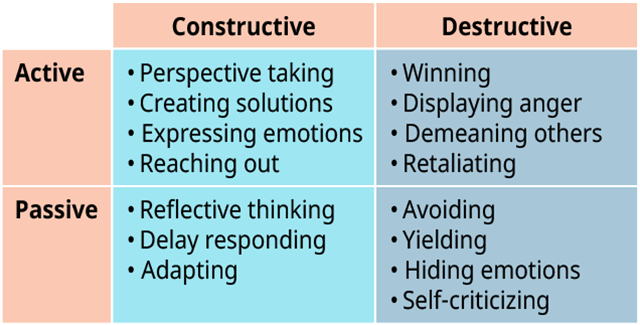
Exhibit 10.6 Responses to Conflict (Attribution: Copyright Rice University, OpenStax, under CC-BY 4.0 license)
In summary, conflict is never easy for an individual or a team to navigate through, but it can and should be done. Illuminating the team about areas of conflict and differing perspectives can have a very positive impact on the growth and future performance of the team, and it should be managed constructively.
Common Approaches to Conflict Resolution
There are five common approaches, or styles, to handling negative conflict. Each of the approaches combines some degree of cooperation and assertiveness. Each of them is more likely to be effective in certain cases and not in others. A manager has the responsibility to make sure that the conflict resolution process—whichever approach is followed—is executed impartially and with respect for all the parties involved. Finally, experts agree that it is better to address conflict sooner rather than later to prevent escalation that would affect team performance. The five approaches are described in the following text. An easy way to remember these approaches are as “no way, my way, halfway, your way, and our way.”
Avoiding (no way)
Rarely, but occasionally, the best approach to conflict is to ignore it. When the reason for the conflict is trivial (as when someone was inadvertently left off an e-mail) or when waiting for more information would help resolve the conflict, the avoidance approach is appropriate. The manager may also want to avoid the conflict if she wants team members to handle it informally, on their own—and if the conflict does not significantly interfere with team performance. A manager may also decide to avoid an issue if there could be no possible resolution to addressing the conflict (a “lose-lose” situation).
Dominating (my way)
The dominating style (“my way or the highway”) may actually be an appropriate response in emergency situations or when quick, decisive action is needed. It may also be the only effective approach for unpopular decisions or when individual team members are personally affected. Imagine that a popular and senior team member has been making disparaging and offensive remarks about another individual on the team. The target is not the type to complain, but you have heard that he is unhappy and thinking about leaving the team. You may be tempted to get them together to hash out the problems, but a better approach might be to tell the senior team member that his behavior is affecting team performance, that you are relying on him to behave more professionally, and that you will be monitoring the situation.
Compromising (halfway)
Compromise is an option where the parties in question are willing to forfeit some of their needs to reach an agreement. Compromising can be an effective approach
- when the arguments on both sides are equally rationale.
- when the participants are fairly equal in status.
- when both sides are willing to give something up.
- when time or expediency is a factor.
With compromise, we often consider this a give and take, or pessimistically a lose-lose. No one really walks away completely happy, but we’ve arrived at a solution that’s workable.
Accommodating (your way)
Accommodating a team member may be an effective strategy for resolving conflict when you agree that the team member is, in fact, right. It can also be a good approach if you don’t feel strongly about the result, if you want to gain goodwill from the team member, or if it is more important at that particular time to keep the whole team functioning and cooperating.
Collaborating (our way)
The collaborative approach is also known as the win-win approach. It is mostly used in high-stakes conflicts when getting a resolution is too important for the issues not to be carefully examined. It requires a great deal of skill to use the collaborative approach successfully. Negotiation and mediation are types of collaboration, usually in formal situations such as labor negotiations or creating employment contracts for senior level management. Negotiation and mediation are most effective when both parties have something to gain and something to lose, and when there is great amount of interdependence.
Concept Check
- What are some techniques to make conflict more productive?
- Describe the various approached to conflict resolution.
10.5 Team Diversity
- How does team diversity enhance decision-making and problem-solving?
Decision-making and problem-solving can be much more dynamic and successful when performed in a diverse team environment. The multiple diverse perspectives can enhance both the understanding of the problem and the quality of the solution. Diversity is a word that is very commonly used today, but the importance of diversity and building diverse teams can sometimes get lost in the normal processes of doing business. Let’s discuss why we need to keep these principles front of mind.
In the Harvard Business Review article “Why Diverse Teams are Smarter” (Nov. 2016), David Rock and Heidi Grant support the idea that increasing workplace diversity is a good business decision.9 A 2015 McKinsey report on 366 public companies found that those in the top quartile for ethnic and racial diversity in management were 35% more likely to have financial returns above their industry mean, and those in the top quartile for gender diversity were 15% more likely to have returns above the industry mean. Similarly, in a global analysis conducted by Credit Suisse, organizations with at least one female board member yielded a higher return on equity and higher net income growth than those that did not have any women on the board.
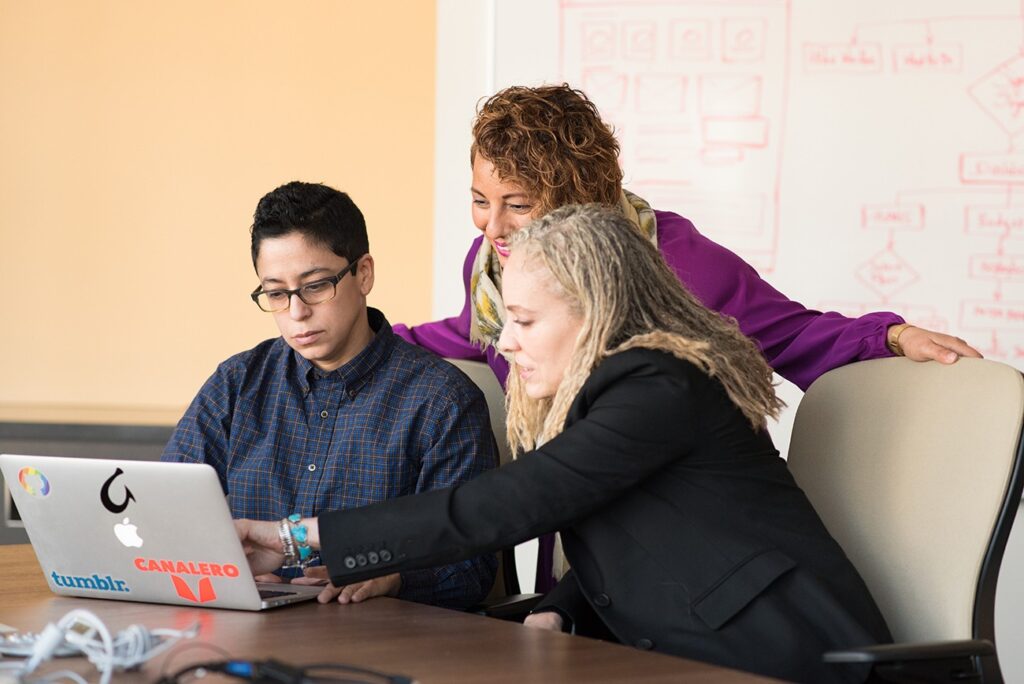
Exhibit 10.7 The Benefits of Diversity for Teams – Teams made up of diverse members tend to perform better than teams of similar backgrounds. Here, the Women of Color in Technology work on a project. The tech industry has been criticized for the lack of diversity among its ranks, and groups like the Women of Color in Technology are looking to change that. (Credit: WOCin Tech Chat/ flickr/ Attribution 2.0 Generic (CC BY 2.0))
Additional research on diversity has shown that diverse teams are better at decision-making and problem-solving because they tend to focus more on facts, per the Rock and Grant article.10 A study published in the Journal of Personality and Social Psychology showed that people from diverse backgrounds “might actually alter the behavior of a group’s social majority in ways that lead to improved and more accurate group thinking.” It turned out that in the study, the diverse panels raised more facts related to the case than homogenous panels and made fewer factual errors while discussing available evidence. Another study noted in the article showed that diverse teams are “more likely to constantly reexamine facts and remain objective. They may also encourage greater scrutiny of each member’s actions, keeping their joint cognitive resources sharp and vigilant. By breaking up workforce homogeneity, you can allow your employees to become more aware of their own potential biases—entrenched ways of thinking that can otherwise blind them to key information and even lead them to make errors in decision-making processes.” In other words, when people are among homogeneous and like-minded (nondiverse) teammates, the team is susceptible to groupthink and may be reticent to think about opposing viewpoints since all team members are in alignment. In a more diverse team with a variety of backgrounds and experiences, the opposing viewpoints are more likely to come out and the team members feel obligated to research and address the questions that have been raised. Again, this enables a richer discussion and a more in-depth fact-finding and exploration of opposing ideas and viewpoints in order to solve problems.
Diversity in teams also leads to greater innovation. A Boston Consulting Group article entitled “The Mix that Matters: Innovation through Diversity” explains a study in which BCG and the Technical University of Munich conducted an empirical analysis to understand the relationship between diversity in managers (all management levels) and innovation. The key findings of this study show that:11
The positive relationship between management diversity and innovation is statistically significant—and thus companies with higher levels of diversity derive more revenue from new products and services.
The innovation boost isn’t limited to a single type of diversity. The presence of managers who are either female or are from other countries, industries, or companies can cause an increase in innovation.
Management diversity seems to have a particularly positive effect on innovation at complex companies—those that have multiple product lines or that operate in multiple industry segments.
To reach its potential, gender diversity needs to go beyond tokenism. In the study, innovation performance only increased significantly when the workforce included more than 20% women in management positions. Having a high percentage of female employees doesn’t increase innovation if only a small number of women are managers.
At companies with diverse management teams, openness to contributions from lower-level workers and an environment in which employees feel free to speak their minds are crucial for fostering innovation.
When you consider the impact that diverse teams have on decision-making and problem-solving—through the discussion and incorporation of new perspectives, ideas, and data—it is no wonder that the BCG study shows greater innovation. Team leaders need to reflect upon these findings during the early stages of team selection so that they can reap the benefits of having diverse voices and backgrounds.
Concept Check
- Why do diverse teams focus more on data than homogeneous teams?
- How are diversity and innovation related?
Key Terms
adaptation
Technique of working with or around differences
boundaries
Lines that make the limits of an area; team boundaries separate the team from its external stakeholders
cognitive complexity
The ability to view situations from more than one cultural framework
collaboration
The action of working with someone to produce or create something
cultural intelligence
A skill that enables individuals to function effectively in cross-cultural environments
emotional intelligence
The capability of individuals to recognize their own emotions and others’ emotions
exit
Technique of last resort—removal of a team member
Forming
The first stage of team development—the positive and polite stage
ground rules
Basic rules or principles of conduct that govern a situation or endeavor
head, body, and heart
Techniques for becoming more adept in cross-cultural skills—learning about cultures (head), physical manifestations of culture (body), and emotional commitment to new culture (heart)
knowledge economy
The information society, using knowledge to generate tangible and intangible values
managerial intervention
Technique of making decisions by management and without team involvement
mining
To delve in to extract something of value; a technique for generating discussion instead of burying it
Norming
The third stage of team development—when team resolves its differences and begins making progress
paradox
A self-contradictory statement or situation
Performing
The fourth stage of team development—when hard work leads to the achievement of the team’s goal
real-time permission
A technique for recognizing when conflict is uncomfortable, and giving permission to continue
Storming
The second stage of team development—when people are pushing against the boundaries
structural intervention
Technique of reorganizing to reduce friction on a team
working group
Group of experts working together to achieve specific goals; performance is made up of the individual results of all members
Summary of Learning Outcomes
10.1 Teamwork in the Workplace
What is a team, and what makes teams effective?
A team is defined as “people organized to function cooperatively as a group.” Some of the characteristics of a team are that it has a common commitment and purpose, specific performance goals, complementary skills, commitment to how the work gets done, and mutual accountability.
Some of the practices that make a team effective are that they have a sense of urgency and direction; they set clear rules of behavior; they spend lots of time together; and they utilize feedback, recognition, and reward.
10.2 Team Development Over Time
How do teams develop over time?
Teams go through different stages of team development, which were coined in 1977 as Tuckman’s Stages of Group Development by educational psychologist Bruce Tuckman. Tuckman’s model includes these four stages: Forming, Storming, Norming, and Performing. A fifth stage, Adjourning, was added later to explain the disbanding and closure of a team at the end of a project.
Forming begins with team members being happy and polite as they get to know each other and understand the work they’ll do together. Storming starts once the work is underway and the team is getting to know each other, and conflicts and project stress begins to seep in. During Norming, the team starts to set rules of the road and define how they want to work together. Performing means that the team is underway and is having some successes and gaining traction. This is definitely not a linear process. Teams can regress to earlier stages if there are changes in team members or work orders that cause disruption and loss of momentum and clarity.
10.4 Opportunities and Challenges to Team Building
What are the benefits of conflict for a team?
Conflict during team interactions can feel like it derails progress, but it is one of the most important experiences that a team can have together. A team that can productively work through conflict will end up stronger, building more trust and being more open to sharing opinions. Team members will feel safe buying in and committing to decision-making as a team.
One of the other key benefits of conflict is that it encourages a greater diversity of ideas and perspectives, and it helps people to better understand opposing points of view. If a team doesn’t work through conflict well and doesn’t feel comfortable with the sharing and debating of ideas, it loses the opportunity to effectively vet ideas and potential solutions. The result is that the decision or solution will be limited, as team members haven’t fully shared their concerns and perspectives.
10.5 Team Diversity
How does team diversity enhance team decision-making and problem-solving?
Decision-making and problem-solving is so much more dynamic and successful when performed in a diverse team environment. Much like the benefits of conflict, diversity can bring forward opposing points of view and different perspectives and information that might not have been considered if the team were more homogeneous. Diverse teams are thus made “smarter” by bringing together an array of information, sources, and experiences for decision-making.
Other research on diversity indicates that diverse teams excel at decision-making and problem-solving because they tend to focus more on facts. Studies indicate that diverse team members may actually sway the team’s behavior to focus more on proven data—possibly because of the prospect of having to explain and back up one’s perspectives if a conflict should erupt on the team. In a more homogenous team, there is more risk of “groupthink” and the lack of challenging of ideas.
Chapter Review Questions
- What are the key differences between a team and a working group?
- At what stage of team development does the team finally start to see results?
- What can cause a team to digress to an earlier stage of team development?
- How does managing conflict help a team learn and grow?
- What are some strategies to make conflict more productive?
- Why are diverse teams better at decision-making and problem-solving?
Management Skills Application Exercises
- Have you ever been part of a team that made it through all stages of team development? In which stage did the team remain the longest? In which stage did the team remain the shortest amount of time? What did you learn?
- In your experience, have you ever been in a situation in which conflict became a negative thing for a team? How was the conflict handled? How can a team manager ensure that conflict is handled constructively?
Managerial Decision Exercises
You are a manager of a team that is taking a long time to move through the Storming stage. There are two individuals on the team that seem to be unproductive when dealing with conflict and are holding the team back. What would you do to help the team move through conflict management and begin Norming and Performing?
One of your direct reports on your team is very focused on his own personal development. He is a strong employee individually, but hasn’t had as much experience working in a team environment on a project. He wants to do well, but isn’t exactly sure how to work within this context. How would you instruct him?
You are the project manager of a cross-functional team project that was just approved. You have been given several good team members who are from different functions, but many of them think similarly and are unlikely to question each other on team decisions. You have the choice of keeping a homogeneous team that will probably have few team issues or building a diverse team that may well engage in conflict and take much longer to come to decisions. What choice would you make? What other information would you want to know to make the decision?
Critical Thinking Case
Diverse Teams Hold Court
Diverse teams have been proven to be better at problem-solving and decision-making for a number of reasons. First, they bring many different perspectives to the table. Second, they rely more on facts and use those facts to substantiate their positions. What is even more interesting is that, according to the Scientific American article “How Diversity Makes Us Smarter,” simply “being around people who are different from us makes more creative, diligent, and harder-working.”
One case in point is the example of jury decision-making, where fact-finding and logical decision-making are of utmost importance. A 2006 study of jury decision-making, led by social psychologist Samuel Sommers of Tufts University, showed that racially diverse groups exchanged a wider range of information during deliberation of a case than all-White groups did. The researcher also conducted mock jury trials with a group of real jurors to show the impact of diversity on jury decision-making.
Interestingly enough, it was the mere presence of diversity on the jury that made jurors consider the facts more, and they had fewer errors recalling the relevant information. The groups even became more willing to discuss the role of race case, when they hadn’t before with an all-White jury. This wasn’t the case because the diverse jury members brought new information to the group—it happened because, according to the author, the mere presence of diversity made people more open-minded and diligent. Given what we discussed on the benefits of diversity, it makes sense. People are more likely to be prepared, to be diligent, and to think logically about something if they know that they will be pushed or tested on it. And who else would push you or test you on something, if not someone who is different from you in perspective, experience, or thinking. “Diversity jolts us into cognitive action in ways that homogeneity simply does not.”
So, the next time you are called for jury duty, or to serve on a board committee, or to make an important decision as part of a team, remember that one way to generate a great discussion and come up with a strong solution is to pull together a diverse team.
Critical Thinking Questions
- If you don’t have a diverse group of people on your team, how can you ensure that you will have robust discussions and decision-making? What techniques can you use to generate conversations from different perspectives?
- Evaluate your own team at work. Is it a diverse team? How would you rate the quality of decisions generated from that group?
Sources: Adapted from Katherine W. Phillips, “How Diversity Makes Us Smarter,” Scientific American, October 2014, p. 7–8.
Chapter 10 Attributions:
Principles of Management by Bright, D. S., Cortes, A. H., Hartmann, E., Parboteeah, K. P., Pierce, J. L., Reece, M., Shah, A., Terjesen, S., Weiss, J., White, M. A., Gardner, D. G., Lambert, J., Leduc, L. M., Leopold, J., Muldoon, J., & O’Rourke, J. S. Available at OpenStax and licensed under CC BY 4.0.
Waymaker Principles of Management by Lumen Learning. Available at Lumen Learning and licensed under CC BY 4.0.