6 Chapter 6 – Managerial Control
Exhibit 6.1 (Credit: marcusrg/ flickr/ Attribution 2.0 Generic (CC BY 2.0))
Learning Objectives
- Explain what control means in a business setting
- Introduce the control process
- Discuss the time and types of control processes
- Describe the benefits and costs of organizational control
- Explore the overuse of the control function
Controlling
Controlling as an Organizational Activity
A few years ago, the Duluth Police Department found itself struggling with employee morale. The summer had passed, and the department discovered that it had allowed too much vacation time given the volume of summer activity facing the department. As it developed its staffing plans for the upcoming summer, it would have to grant fewer requests for summer vacations. Management soon learned that there would actually be more requests for summer vacation than the previous summer. A conflict between management and the police union appeared inevitable.
The department turned to creative problem solving. In the process, it came up with the idea of moving from a seven-day week to an eight-day week. Under the old schedule, a police officer worked a traditional five days a week, eight hours a day, 40 hours, with two days off each week. Under the new schedule, officers would work 12 hours a day and 48 hours a week. In addition, officers would work four days and then have four days off. This would in effect give officers half the upcoming summer off without taking a single day of vacation. The plan was endorsed by both the police union and the city council. Following the endorsement of the new staffing plan, the department developed a plan for monitoring the effectiveness of this new schedule and collected baseline data so that subsequent assessment of the schedule could be compared to previous work schedules.48
In January, the new compressed work schedule was implemented. This was accompanied by a control system that would monitor the effectiveness of the new schedule. The department was particularly concerned about the impact of the schedule on stress levels, job satisfaction, and the overall effectiveness of its policing function. That is, would the 12-hour workday negatively affect performance? Periodically during the next couple of years, the department monitored the consequences of its new work schedule. There were several positive results. The level of stress appeared to decline along with the increases in hours worked and leisure time satisfaction, without any negative performance effects. Now, several years later, there is virtually no desire to return to the old, more traditional work schedule.
In effective organizations, the activities of planning and controlling are intricately interwoven. For each plan deemed important to the functioning of the organization, a system to monitor the plan’s effectiveness must be designed and implemented. In the remainder of this chapter, we explore the nature of control, the control process, and its effects on the organization and its members.
6.1 Controlling and the Control Process
Controlling is a managing activity. Controlling is defined as the process of monitoring and evaluating organizational effectiveness and initiating the actions needed to maintain or improve effectiveness. Thus, managers who engage in the controlling activity watch, evaluate, and when needed, suggest corrective action. Organizational Control involves the processes and procedures that regulate, guide and protect the organization.
Like the managerial functions of planning, organizing, and directing, controlling is a complex activity that is performed at many organizational levels. Upper-level managers, for example, monitor their organization’s overall strategic plans, which can be implemented only if middle-level managers control the organization’s divisional and departmental plans, which, in turn, rely on lower-level managers’ control of groups and individual employees.
Control is installing processes to guide the team towards goals and monitoring performance towards goals (Batemen & Snell, 2013). The purpose of the control function is to ensure that the organization makes progress towards the established goals. This is done prior to implementation of the gameplan as a manager anticipates what might go wrong. Control is done during the process of implementation as the manager monitors the progress and makes changes as needed. As such, the control function of management is highly intertwined with the planning phase. The guides that managers use to ensure progress and the mechanisms used to monitor progress are areas that need direct consideration before the plan implementation begins.
A good analogy for the control process is a road trip. In this analogy the goal (planning) is to drive from Kansas to Missoula, Montana for a bluegrass festival. To go on this roadtrip, you have a budget for gas and gas station food (organizing), and you have convinced your best friend to join you (leading). You have three days to get there for the start of the festival. The controlling function in this road trip is to ensure that you will make it to Missoula in time for the start of the event. In the planning phase, this would include checking the oil, checking the tread on your tires, and checking the windshield wipers. These steps improve the likelihood that you will get to your destination. Based on your estimates, you have decided that you need to drive 9 hours per day over the two days you have allotted for this trip. During the trip, you monitor the gas gauge and each time it falls below the ¼ tank range you find the next stop to fuel up. During the trip, your GPS identifies an accident that is delaying traffic outside of Denver. The GPS suggests you reroute to save an hour by going on the toll way. The first day you drive 5 hours because you decided to stop at REI in Denver. Because you are behind schedule, you decide to start the second day at 6am to make up the extra hours. Each of these pre-trip checks and adjustments during the trip are considered control mechanisms. They help you guide the trip, and to monitor progress towards the goal.
The Need for Control
Although there is a continual and universal need for control in organizations, the importance, amount, and type of control vary across organizational situations. Probably the most important influence on the nature of an organization’s control systems is the amount of environmental change and complexity it faces.
Organizations that operate with relatively stable external environments usually need to change very little, so managers eventually are able to control their organizations by using a set of routine procedures. With greater levels of environmental change and the accompanying uncertainty, however, controlling requires continual attention from managers. Routines and rigid control systems are simply not adequate for such conditions.
Environmental complexity also affects the nature of control systems. Simple environments contain a limited number of highly similar components that are relatively easy to control through common sets of rules and procedures. The same bureaucratic control system, for example, can be used at most branch offices of a large bank. As complexity increases through organizational growth, product diversification, and so on, managers’ needs for up-to-date information and coordination among organizational activities intensify. The complexity that calls for increased control, however, also requires open, organic systems that can respond quickly and effectively to complex environments. In such complicated situations, organizations often specify the development of flexible systems as a means goal: “To allow us to manage the complexities of our organization, we must remain flexible and open.” Other control activities shift to ends goals, such as “We want to increase market share 10 percent in each of our divisions.” Flexibility allows substantial choice as to how ends goals will be met: “Each division may decide how to achieve its 10 percent increase in market share.” Exhibit 6.2 shows the level of control organizations need under different environmental conditions.
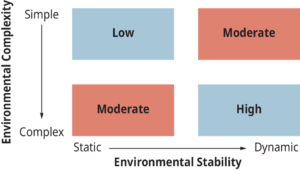
Exhibit 6.2 Need for Control (Attribution: Copyright Rice University, OpenStax, under CC-BY 4.0 license)
Implementing Organizational Control
Organizational control involves developing rules, procedures, or other protocols for directing the work of employees and processes as well as monitoring the work. Organizational control is an important function because it helps identify errors and deviation from standards so that corrective actions can be taken to achieve goals. The purpose of organizational control is to ensure that a specific function is performed according to established standards.
Benefits
Organizational control has many varied benefits, including improved communication, financial stability, increased productivity and efficiency, help in meeting annual goals, improved morale, legal compliance, improved quality control, and fraud and error prevention.
Controls help to better define an organization’s objectives so that employees and resources are focused on them. They safeguard against misuse of resources and facilitate corrective measures. Having good records means management will better understand what happened in the past and where change can be effective.
All businesses need controls. Even sole proprietor businesses must keep records for tax reporting. Public companies are legally required to have extensive controls to protect stockholders, and good controls help a company to raise funds through stock and debt issuance.
Employee morale may be higher when workers see that management is paying attention and knows what it is doing. As an earlier module discussed, better morale means better productivity. Better controls can mean more freedom and responsibility for employees. Management is able to step back a little, knowing that the controls will flag any exceptions.
Toyota has made control a competitive advantage. As an article in the Harvard Business Review says, “Toyota’s way is to measure everything—even the noise that car doors make when they open and close as workers perform their final inspections on newly manufactured automobiles.” (Note: Thomas A. Stewart and Anand P. Raman, “Lessons from Toyota’s Long Drive,” Harvard Business Review, July–August 2007, https://hbr.org/2007/07/ lessons-from-toyotas-long-drive.) After bad publicity over unusual brake issues, Toyota was again at the top of Consumer Reports’ 2016 reliability report. (Note: Michelle Naranjo, “CR’s Car Reliability Survey Reveals Shuffles in Brand and Model Rankings,” Consumer Reports, October 24, 2016, https://www.consumerreports.org/car reliability/car-reliability-survey-2016/.)
Disadvantages
Even the simplest control is an added expense. Some systems can be very expensive, so management must weigh the cost versus the benefit for each control. Banks spend billions on controls, but it is worthwhile for the large banks, because they handle trillions and their profits are still in the billions.
A control mentality can lead to overstaffing and unsustainable costs for some businesses. Community banks, for example, feel the burden of new regulations on the banking industry more heavily than the largest nationwide banks. Research from the Federal Reserve Bank of Minneapolis, Minnesota, and quoted in the New York Times “suggests that adding just two members to the compliance department would make a third of the smallest banks unprofitable.” (Note: Marshall Lux and Robert Greene, “Dodd-Frank Is Hurting Community Banks,” New York Times, last updated April 14, 2016, https://www.nytimes.com/roomfordebate/2016/04/14/has-dodd-frank eliminated-the-dangers-in-the-banking-system/dodd-frank-is-hurting-community-banks.)
A less obvious expense is maintaining the controls. Systems need continuous updating as the organization changes. If they are not maintained, the controls may become ineffective.
Controls can become a blind spot for management. Overreliance on controls may lead to relaxation in supervision and allow manipulation of accounts and assets. Employees tend to follow the letter of rules, not the intent, so management needs to check in regularly on how controls are actually operating.
A rigid implementation may lead to a slowdown in the operation of the business. At Freddie Mac, a financial services company, the new product approval process required 25 signatures and took more than a year. The new opportunities in the market disappeared before products could be approved.
The wrong controls may expose the firm to more errors and fraud. And employees will be frustrated if the controls are cumbersome.
6.2 A Control Process
One of the fundamental elements of the control function of management is to monitor progress. Monitoring progress implies that you need a standard against which to judge whether you are making progress. There is a specific process that allows you to do this, known as the control process.
In essence, control affects every part of an organization. Among some of the major targets of the organization’s control efforts are the resources it receives, the output it generates, its environmental relationships, its organizational processes, and all managerial activities. Especially important targets of control include the functional areas of operations, accounting, marketing, finance, and human resources.
Traditional control models (see Exhibit 6.3) suggest that controlling is a four-step process.

Exhibit 6.3 The Traditional Control Model (Attribution: Copyright Rice University, OpenStax, under CC-BY 4.0 license)
Establish standards. Standards are the ends and means goals established during the planning process; thus, planning and controlling are intricately interwoven. Planning provides the basis for the control process by providing the standards of performance against which managers compare organizational activities. Subsequently, the information generated as a part of the control process (see the subsequent steps in the control model) provides important input into the next planning cycle.
Monitor ongoing organizational behavior and results. After determining what should be measured, by whom, when, and how, an assessment of what has actually taken place is made.
Compare actual behavior and results against standards. Ongoing behavior is compared to standards. This assessment involves comparing actual organizational accomplishments relative to planned ends (what an organization is trying to accomplish) and means (how an organization intended for actions to unfold). The outcome of this comparison provides managers with the information they will evaluate in the final step.
Evaluate and take action. Using their comparative information, managers form conclusions about the relationships found between expectations and reality and then decide whether to maintain the status quo, change the standard, or take corrective action.
The control process begins with the standard or goal to reach. This portion of the control process is done during the planning phase of management. The standard could be to improve sales by 14%, reduce turnover in Q1 by 1%, improve our season win total by 4 games, reduce batch rejection rates on manufacturing output, etc. This standard includes both the end goal, but more complex goals require mile posts along the way. For example, a 14% improvement in sales over the course of a year means that monthly sales targets should also be monitored that add up to the yearly goal. Measuring performance is also a step that needs to be planned for during the first phase of the management process. How will I keep track once I begin my plan?
Monitoring performance might include creating a dashboard to monitor performance indicators, but it might also include periodic check in’s with members of the organization to see how they are handling the implementation of the plan. Step three simply means comparing the actual performance to standard. Step four is a reboot to the planning phase. In our sales analogy, let’s say that the yearly goal is a 14% improvement. By the fifth month, the sales manager checks the progress and sees that progress is slow, and they are only at 4%. The sales manager decides that to reach the goal, they recommit marketing resources to increase advertising. The progress was not up to the standard, so an adjustment is necessary. The flipside of step four is that even if progress is made towards goal, adjustments might still need to be made. Back to our sales analogy – five months in, and good progress is made. The sales team has done well, and the organization has made 9% towards the 14% goal. Even though progress is being made, a handful of salesmen are burnt out. The manager decides that the team could use a breather and decides to take all of the salesmen to an MLB baseball game, and dinner and wine to celebrate the small victory towards the goal. The salesmen are making progress, but they need an emotional break. The manager recognizes this and commits resources (organizing) to motivate (leading) the sales team to keep pushing. In this way, the control function cycles back to the other functions of management.
6.3 Timing of Control
We just reviewed that one of the main elements of control is to monitor progress and make adjustments. The second major component of the control process is to guide the progress. This guidance can happen at different times of the gameplan you are pursuing. Organizations can introduce the control activity at three stages in the work process: prior to (feedforward), during (concurrent), or after (feedback)the performance of a work activity.49 In practice, most managers use a hybrid control system that incorporates control at each of these intervals so that managers can prepare for a job, guide its progress, and assess its results.
Feedforward control is putting in guiding rails prior to implementation of the gameplan. Bateman and Snell (2013) define this as a control process used before operations begin, including policies, procedures, and rules designed to ensure that planned activities are carried out properly. An example of a feedforward control mechanism is a manager who requires hard hats, harnesses, and safety protocols during the construction of an office building. These are policies that help ensure the gameplan will be carried out properly. This might also include a commitment to nets outside of scaffolding in addition to requiring harnessing for an office construction.
Concurrent control is a change you make during the implementation of the gameplan. In many ways, concurrent control is a mini version of the control process itself, done in a much shorter timeframe. This can include serious issues, like stopping production when you see a leak in the tank, to fine tuning that you might do as you are harvesting a field like adjusting the speed of the combine. In our road trip analogy, this is the slight turning of the wheel as the road curves, or completely taking a detour because your GPS says an accident is ahead. Reconciling real your budget real time as expenses come in is an example of concurrent control as you make small adjustments to spending as a result.
Feedback control uses information from previous results to make adjustments as you plan for future gameplans. This is the core of learning within an organization. This is the reason why NFL teams watch game film the day after a game. This means reviewing what you did well so you can keep doing it, to understanding where you failed and what caused it. Some organizations require a post mortemanalysis for every major project they finish. What went wrong? How did we perform? The Wall Street Journal reported in 2010 that Foxconn installed safety nets outside of their Hebei, China factory after 10 employees jumped to their death. Reports indicate that employees live in dorms outside the plant in terrible conditions. This represents a feedback control process because their nets were an attempt to curb the death problem. This is a good example of feedback control, but not necessarily good management.
6.4 Types of Control
We have reviewed that control has a specific process to follow, and that process can be executed at several stages during the execution of the gameplan. What needs to be further explored are the types of control processes that managers have at their disposal. The basic definition of control is that we want to make sure we are on track and to guide the plan. Most control processes under this framework are formal mechanism, meaning management puts specific processes in place that everyone can see and track. These would include bureaucratic and market control processes. However, some control processes are considered informal, known as clan control.
Bureaucratic control is an official policy or rule implemented in the organization that is derived from the legitimate authority of the manager. Bureaucratic controls would include examples such as requiring daily reports on progress or inventory reconciliations. It could include establishing sales revenues projections, and implementing reward systems around this metric. It would include establishing protocols regarding the safety of heavy equipment operation or floor manufacturing at a factory. Many of these safety processes are established by governmental organizations such as OSHA or the EPA.
Market control is the use of external information to serve as a standard or metric against which to measure internal progress. Consider the following example. The marketing firm of an organization has designed a new product and the goal is to garner 15% market penetration in the first year. Prior to launching the product, they decide to bring in a consumer focus group to provide feedback on the design. This feedback compels the team to make some minor tweaks prior to product launch. This team has used an external element, that being the opinions of consumers, to make sure they progress towards their goal of a successful launch. Finance and trading organizations regularly used external controls around which to make decisions on which assets to divest, and in which assets to invest. This would include a trading strategy that establishes a standard that if the price of oil falls 25%, the company should liquidate their position in commodities to minimize losses.
Clan control consists of any form of informal influence that an organization has on an individual that directs them toward the goals of the organization. Clan control can derive from the cultural values and beliefs of the organization that influence behavior. Clan control can also be a more direct influence in the form of peer pressure. Consider the example of an organization that places high value on integrity. Jane is an accounting professional within the organization that refuses to violate a small section of the tax code in an area where the language of the tax code is gray. She decides to act on the conservative side and behave with integrity because she knows that her decision aligns with the personal values of her team leader, and if her integrity were questioned, she would be less esteemed by her peers. One final note on clan control is that it can wield either a positive or a negative influence on members of the organization.
Characteristics of Effective Control Systems
Successful control systems have certain common characteristics. First, a good control system follows the prescriptions in the control model and adequately addresses each organizational target. Next, to the extent possible, an effective control system takes a hybrid approach so that Feedforward, Concurrent, and Feedback control systems can be used to monitor and correct activities at all points in an organization’s operations. Other characteristics of a good control system include its treatment of information, its appropriateness, and its practicality.50
The control process itself and, certainly, all effective control systems are based on information. Without good information, managers cannot assess whether ends and means goals are met. They cannot determine the relationship between them or provide feedback to planners. To be effective, information must be accurate, objective, timely, and distributed to organization members who need it. High-involvement organizations work to make sure that virtually all organizational information is accessible by any employee who needs it in order to make quality decisions. Oticon, a Danish manufacturer of hearing aids, for example, scans all company communications and places them in its information system that all employees can access.

Exhibit 6.5 Oticon building – As a management control procedure, Oticon, the Danish manufacturer of hearing aids, scans all company communications and places them in its information system that all employees can access. (Credit: News Oresund/ flickr/ Attribution 2.0 Generic (CC BY 2.0))
Another characteristic of a good control system is its focus on issues of importance to the organization. Managers who develop control procedures for virtually all work activities and outcomes waste resources and, as will be discussed later in this chapter, risk creating a control system that produces negative feelings and reactions.
A final characteristic of a good control system is its practicality. Something that works well for another organization or looks wonderful in print still has to fit your organization to work well there. Some practical considerations to look for in a control system include feasibility, flexibility, the likelihood that organization members will accept it, and the ease with which the system can be integrated with planning activities.
6.5 The Need for a Balanced Scorecard
The Gartner Group has found that more than 50 percent of large US firms use a balanced scorecard (BSC). Moreover, many large firms all over the world use the balanced scorecard in business operations. (Note: What is the Balanced Scorecard? (n.d.). Retrieved September 19, 2017, from http://www.balancedscorecard.org/BSC Basics/About-the-Balanced-Scorecard) The scorecard system is a reaction to earlier mistakes driven by a narrow focus on financial results. The balanced scorecard adds goals for a company’s customers, internal quality, and learning and growth.
Balanced Scorecard Components
Bain & Company, a global consulting firm, ranks the balanced scorecard fifth of the top 10 management tools used around the world. The balanced scorecard is a system used by organizations to do the following:
- communicate goals
- align daily tasks with strategies
- prioritize projects
- measure performance
- monitor progress
Traditionally, companies have used financial measures to determine their health. The term “balanced scorecard” comes from looking at strategic measures in addition to financial measures for a balanced view of performance. The BSC typically looks at the company from four different perspectives to measure learning and growth, internal business processes, customers’ perspective, and financials.
Learning and Growth
The learning and growth perspective involves the culture of a company. When managers look at their company from this perspective, they ask themselves questions such as: Are the employees learning? Is the company growing in its capacities? Are we using the latest and best technology and software? Do employees have access to continuing education, and if so, are they taking advantage of the opportunities? Is the company staying ahead of the competition regarding employee talent?
If a company is not learning and growing, it is dying. Learning and growth are necessary to ensure a company maintains or gains a competitive edge. Without it, a company is not sustainable.
Internal Business Processes
This perspective focuses on how well the company is running. Managers measure quality and efficiency and how to adapt to changing conditions.
Customer’s Perspective
The customer’s view is often measured by surveying existing customers directly. Less obvious is talking to customers who defected, or switched to another brand or product. Harvard Business Review says, “acquiring a new customer is anywhere from five to 25 times more expensive than retaining an existing one.” (Note: Amy Gallo, “The Value of Keeping the Right Customers,” Harvard Business Review, October 29, 2014, https://hbr.org/ 2014/10/the-value-of-keeping-the-right-customers) The company must determine whether it is competitive in meeting customers’ needs. Without the customer, there is no business.
Financial
Companies need to succeed financially to continue operating. Focusing on other aspects of a company while ignoring its financial state leads to disaster. Measures such as revenue, profit, and ratios such as return-on-equity (ROE) show performance. Other measures are asset turnover, liquidity, gross profit margin, and the current ratio.
Why a BSC Is Needed
Fannie Mae is a financial services company. Before 1992, Fannie Mae’s compensation structure was linked to a wide range of performance measures. Beginning in 1992, earnings-per-share growth and growth were the only measures used to set incentive pay for Fannie executives. The incentive pay handed to Fannie executives more than quadrupled after this change, rising from $8.5 million to $35.2 million (1993 to 2000). In 2003, the regulator overseeing Fannie Mae found accounting fraud. Without a balanced scorecard, executives focus on only one or a few aspects of the organization. A company may be doing well financially but performing poorly in another area. Even if a company is doing extremely well in one area and outperforming the competition, the area that needs the most improvement may destroy the company. For example, a company may exceed customer expectations related to product quality, corporate social responsibility, and customer service; however, its gross profit margin could be low. With a low gross profit margin, the company may not be able to grow, compete, or overcome obstacles. A BSC forces managers to look at the company as a whole to measure performance and thus more accurately determine the company’s overall state. Managers can then work to improve in areas in which it is lacking.
6.6 Financial and Nonfinancial Controls
Budgetary Control
The standard financial reports are the statement of cash flows, the balance sheet, the income statement, financial ratios, and budgets. For most large companies, the first three are required by law. Stockholders need to know how their company is doing. Financial ratios help in investing decisions and in managing the company. They are common but not legally required. Budgets are internal plans, which the company does not typically disclose.
A budget sets a limit on spending and thus is a method of control used to help organizations achieve goals. The budget may be single number setting a manager’s spending limit or a plan with limits for detailed items. Departments and the whole organization will develop budgets both for planning and control.
To follow a budget requires discipline. When an expense or desirable pops up, managers must prioritize purchases to stay within budget. In this sense, budgets help control spending and ensure that goals are reached by allocating money to the places where it is needed. Without this planned allocation of resources, there is the risk of spending too much money in one or a few areas, thereby not having enough for other areas.
Budgets can also be used to delegate authority. When an executive assigns a task to a subordinate, the executive needs to release the funds in order for the employee to complete the task. In releasing the funds with an assigned budget, the executive delegates the authority to make decisions regarding the proper use of the funds. The executive can use the budget as a means of monitoring and measuring the performance of the subordinate. With this means of control, the executive may feel comfortable with delegating authority.
Financial Ratios
When people think of management, they often visualize a person giving orders, hiring employees, checking the work of employees, establishing policies, and administering discipline. However, watching the numbers is also an important activity in management. The numbers can be converted to financial ratios, which allow easy comparisons.
Managers use ratios to analyze elements such as debt, equity, efficiency, and activity. For example, a debt ratio compares an organization’s debt to its assets. It is calculated as total liabilities divided by total assets. The higher the ratio, the more leveraged the company is. If a company has a high debt ratio (relative to its industry), the company has to spend a significant portion of its cash flow on bills.
The key to understanding ratios is comparing them to relevant benchmarks. The debt ratio for a manufacturing company might typically be 50 percent, meaning debt funds half of the assets. In a bank the typical debt ratio is around 92 percent. The relevant benchmark for a bank is the banking industry average or another bank, not a manufacturer.
Analyzing financial ratios can help managers determine the financial health of the company. Knowing the state of the company in various areas (e.g., inventory, equity, and debt) allows managers to make the changes needed to course-correct and to reach goals.
Quality Management
Have you ever bought a product that was defective? Have you ever been served by a company representative in such a way that it made you want to tell people what a great company it is or give the company five-star ratings on social media? In both cases, quality management was behind the scenes of your customer experience.
Quality management involves controlling, monitoring, and modifying tasks to maintain a desired level of quality or excellence. At the core of quality management is customer satisfaction. Companies pursue the level of quality for their products and services that customers expect and desire. Managers strive to know what customers want, and they manage operations in such a way as to fulfill those desires. Total Quality Management (TQM) and Six Sigma are well-known programs for managing quality.
Benefits: Quality management helps companies please their customers. When customers are pleased, a company can thrive. A simple example of quality management is part inspection. When a part comes down the production line and is complete, an inspector, or quality-assurance technician, checks and tests the part to ensure that it meets quality standards. If it does not, the part is discarded. Thus, quality management helps to ensure that customers are not disappointed so that a company can maintain a good reputation, gain a competitive edge, and ultimately make a profit.
By reducing defects, companies save both time and money. There are fewer returns from customers, and customers are more loyal, reducing the need and cost of acquiring new customers. By catching mistakes early, the production process is not tied up with damaged materials. The final output of acceptable goods increases.
The Systems Sciences Institute at IBM has reported that the cost to fix an error found during beta testing was 15 times as much as one uncovered during design. If the same error was released, the cost to fix the error was up to 100 times more during the maintenance period. (Note: Maurice Dawson, Darrell Burrell, Emad Rahim, and Stephen Brewster, “Integrating Software Assurance in the Software Development Life Cycle (SDLC),” Journal of Information Systems Technology & Planning, 3, no. 6 (2010): 49–53. https://www.researchgate.net/publication/ 255965523_Integrating_Software_Assurance_into_the_Software_Development_Life_Cycle_SDLC.)
Costs: Regulations are a type of control that society puts on companies. For some large banks, the cost of complying with regulations averages about $12 billion per year. (Note: Saabira Chaudhuri, “The Cost of New Banking Regulation: $70.2 Billion,” Moneybeat (blog), Wall Street Journal, July 30, 2014, https://blogs.wsj.com/ moneybeat/2014/07/30/the-cost-of-new-banking-regulation-70-2-billion/) That is a hefty control cost until you consider the cost of control failure. Financial losses in the Great Recession were $10 trillion to $12 trillion! (Note: Eduardo Porter, “Recession’s True Cost Is Still Being Tallied,” Economic Scene, New York Times, January 21, 2014, https://www.nytimes.com/2014/01/22/business/economy/the-cost-of-the-financial-crisis-is-still-being tallied.html)
A focus on customers often drives managers to great lengths to please customers. In doing so, quality management can become expensive. Typically, companies need to purchase new software and equipment, hire and train employees, conduct studies, and consult with experts to improve the quality of its products and services. These activities add to the cost of doing business. Management must weigh the costs and benefits.
The following video explains the role TQM plays in an organization as a whole: https://www.youtube.com/watch?v=85Y8iBhzqwk
6.7 Too Much Control?
There is a final aspect of the control process that needs to be explored. At what point does a manager put too many control mechanisms in place. There is a range of control mechanisms that can be used – too few and the manager would not be successfully monitoring or guiding progress, too many and the employees will feel like they are being micromanaged. Research shows that a manager that uses too few controls limits creativity, innovation, and organizational learning (Bligh, Kohles, & Yan, 2018). This makes sense if the manager’s main role is guiding the progress. Members of the organization don’t have the guidance and feedback that foster these ideals. A manager that puts too many control processes in place exposure the organization to lower levels of commitment, higher turnover, and more job stress among members of the organization (Bozeman, et al., 2001).
A manager has to appropriately balance the use of too much control and not enough control. If we return to Socrates and the Sordite’s Paradox, we can see that the extremes probably lead to negative outcomes. There is a gray area that managers might consider a reasonable level of control.
The balance between too much and too little is a complex one. More difficult yet, some employees might need more control, and others might need less control. Let’s explore that idea. You might put more control mechanisms in place for employees who are new to the job. They are not experienced in the task that needs to be completed, so you need to monitor their performance so that you can give them feedback. More controls might be needed for an employee who is engaged in a dangerous task such as operating heavy equipment, or flying an airplane. Think of all the checklists even experienced commercial pilots go through before turning on the aircraft. Each of these steps are control processes (lights and indicators showing avionics, mechanical performance, etc.). Heavy controls might also be needed for those who are making decisions with serious consequences such as profitability. For example, a company sending in a bid on a major project worth millions of dollars might have extra oversight to make sure the bid is done properly. The more serious the consequences, the more to the right on the control range the manager should consider. Additionally, heavy controls should also be used when the task is brand new to the organization. Think about the response to 9/11, corona virus, or a mass shooting. How an organization responds to these events is one they have never experienced. Any strategy to deal with these situations might warrant more control processes to ensure its success.
Controls can be less when we are in familiar territory. Someone performing routine tasks or those that would result in low consequences if done incorrectly don’t need heavy amounts of control. The same can be applied to monitoring the performance of individuals who have proven themselves through previous performance. Monitoring their behavior or guiding their work would give them the feeling of micromanagement.
Key Terms
Balanced Scorecard (BSC) – A management tool used to communicate goals, align strategies, prioritize projects, measure performance, and monitor progress.
Budgetary Control – Limits spending to help achieve financial goals and allocate resources.
Concurrent Control – Real-time monitoring of processes and activities.
Customer Perspective – Evaluates customer satisfaction and retention.
Debt Ratio – Compares total liabilities to total assets, indicating company leverage.
Feedback Control – Reactive control based on past performance.
Feedforward or Preventive Control – A strategy to stop issues before they occur.
Financial Perspective – Assesses financial success through revenue, profit, and ratios like return-on-equity (ROE).
Financial Ratios – Metrics used to evaluate company health, including debt ratio, liquidity, and gross profit margin.
Internal Business Processes – Measures quality, efficiency, and adaptation within an organization.
Learning and Growth Perspective – Focuses on employee development, company growth, technology, and continuing education.
Organizational Control – the processes and procedures that regulate, guide and protect an organization.
Total Quality Management (TQM) – A strategy focused on continuous improvement in quality.
Summary of Learning Outcomes
6.1 – Control and the Control Process
Controlling is the process of monitoring and evaluating organizational performance and taking corrective action to ensure progress toward goals. Like planning, organizing, and leading, it operates at all levels of management:
Upper-level managers oversee strategic goals
Middle managers manage departmental plans
Lower-level managers supervise teams and individuals
Control systems must adapt to:
Environmental stability: Routine procedures may suffice
Environmental complexity and change: Require flexible, responsive systems and real-time data
In dynamic environments, rigid controls fail. Organizations must balance structured goals (e.g., increase market share) with flexible methods for achieving them.
6.2 – The Control Process
The traditional control process follows four key steps:
Establish Standards – Set clear goals and performance benchmarks during the planning phase.
Monitor Performance – Track progress using tools like dashboards, reports, and check-ins.
Compare Results to Standards – Evaluate actual outcomes against planned targets.
Evaluate and Take Action – Decide whether to maintain course, adjust strategies, or take corrective action.
Control is not a one-time task—it’s a continuous cycle that feeds back into planning. For example, if sales are lagging, a manager might increase marketing efforts. If progress is strong but morale is low, a manager might invest in team motivation. In both cases, control supports and enhances the other managerial functions.
Ultimately, effective control ensures that organizations stay on track, adapt to challenges, and sustain momentum toward their goals.
6.3 – Timing of Control
Managers guide and adjust work processes through control mechanisms applied at different stages:
Feedforward Control (Before Work Begins) Preventative measures taken in advance to ensure proper execution. Example: Safety protocols like hard hats and harnesses on a construction site.
Concurrent Control (During Work) Real-time adjustments made while tasks are being performed. Example: Adjusting a combine harvester’s speed or stopping production due to a leak.
Feedback Control (After Work) Evaluation of completed work to inform future improvements. Example: Post-project reviews or analyzing game footage to improve performance.
Most organizations use a hybrid approach, combining all three types to prepare, guide, and learn from their operations.
6.4 – Types of Control
Managers use different types of control to ensure progress and guide organizational plans.
Bureaucratic Control – Based on official rules, policies, and authority.
Market Control – Uses external benchmarks or market data to guide decisions.
Clan Control – Relies on shared values, culture, and peer influence.
6.5 – The Balanced Scorecard
The Balanced Scorecard (BSC) is a strategic management tool used by over half of large U.S. firms and many global organizations to avoid the pitfalls of focusing solely on financial outcomes. It provides a more comprehensive view of organizational performance by incorporating four key perspectives:
- Learning and Growth – Focuses on employee development, innovation, and the use of technology. Questions: Are employees learning? Is the company evolving?
- Internal Business Processes – Assesses operational efficiency, quality, and adaptability to change. Emphasis: Streamlining processes and improving productivity.
- Customer Perspective – Measures customer satisfaction and retention. Insight: Retaining customers is more cost-effective than acquiring new ones.
- Financial Performance – Tracks traditional financial metrics like revenue, profit, and return on equity. Reality: Financial health is essential but not sufficient on its own.
6.6 – Financial and Non Financial Controls
Organizational control includes both financial and nonfinancial tools to guide performance and ensure goals are met.
Financial Controls
Budgetary Control– Budgets set spending limits and allocate resources to priority areas. They help managers stay disciplined, delegate authority, and monitor performance. Budgets are internal tools used for both planning and control.
Financial Ratios – Ratios (e.g., debt-to-assets) help assess financial health and guide decisions. They allow comparisons across time or against industry benchmarks. Managers use them to evaluate efficiency, leverage, and profitability.
Nonfinancial Controls
Quality Management – Focuses on customer satisfaction and operational excellence. Programs like Total Quality Management (TQM) and Six Sigma reduce defects and improve consistency. Benefits include cost savings, customer loyalty, and competitive advantage.
Cost Considerations – Controls can be expensive to implement and maintain (e.g., regulatory compliance, quality systems). However, the cost of control failure—such as product recalls or financial crises—can be far greater. Managers must balance the investment in controls with their long-term value.
6.7 – Balancing Managerial Control
Managers must carefully balance control mechanisms—too few can hinder creativity and learning, while too many can lead to micromanagement, stress, and turnover. The ideal level of control lies in a nuanced middle ground. Ultimately, effective managers tailor control levels to context, task complexity, and individual needs to foster both accountability and autonomy.
Chapter Review Questions
- Define organizational control.
- Identify and briefly describe each stage in the controlling processes.
- What are the three time elements of control? Consider examples of all three time measures for a goal of getting an A in this class.
- What is the Balanced Scorecard and what are the four components?
- Identify and discuss positive and negative effects often associated with control systems.
- Can there be too much control? Explain.
Management Skills Application Exercises
Use the tools described in this chapter to write a plan that will help control a plan you’ve established: (e.g., achieve an A average in all of my core concentration courses and A– in all courses I am taking). Also account for personal time and other activities you are involved in and goals that you have for these, such as keeping physically fit, etc.
Critical Thinking Case
How Do Amazon, UPS, and FedEx Manage Peak Seasons?
Typically, the day after Thanksgiving (Black Friday) marks the beginning of the holiday shopping season in the United States. Holiday sales, typically defined as sales occurring in November and December, account for roughly 30 percent of annual sales for U.S. retailers (Holiday Forecasts and Historical Sales 2015). For 2016, total online sales from November 10 to December 31 amounted to 91.7 billion dollars. And the top retailers for this period were eBay, Amazon, Walmart, and Target (Tasker 2016). The growth in online sales appears inevitable, but how do the top shippers, UPS and FedEx, manage the sudden upsurge?
Not always so well. In 2013, both FedEx and UPS underestimated holiday demand, and with bad weather conditions as well, struggled to deliver packages as promised. Since then, both carriers have worked hard to keep adequate resources available to handle the end-of-year upsurge. But in 2014, UPS overcompensated and had too much capacity, once again damaging profitability (Livengood 2017).
Matching retailer expectations to reality is a challenge, and not just for the shipping companies. Although retailers would prefer to know how much to expect in sales, forecasts will be inaccurate, sometimes wildly so. In preparing its forecast for the 2017 peak season, Logistics Management examined economic factors, such as GDP, job growth, retail sales, and inventory levels. It also looked at imports. An informal survey of logistical professionals found that 93.5 percent expect the 2017 season to be the same as 2016 (35.5 percent) or more active (58 percent) (Berman 2017).
In June 2017, UPS announced that it would be adding a surcharge to some peak season rates. According to the UPS website, “During the 2016 holiday season, the company’s average daily volume exceeded 30 million packages on more than half of the available shipping days. In contrast, on an average non¬peak day, the company ships more than 19 million packages” (UPS Establishes New Peak Shipping Charge 2017). The rate for the 2017 peak season would apply to select services and to oversize shipments, primarily (UPS Establishes New Peak Shipping Charge 2017). Analysts see the surcharge as a signal that UPS is the rate setter in parcel delivery. Such an assessment is not surprising given that the increase in parcel delivery as an outcome of increased e-commerce is seen as a core driver of earnings for UPS (Franck 2017).
Second-ranked FedEx, in contrast, announced that it would not follow suit but instead would “forgo most holiday surcharges on home deliveries this year” (Schlangenstein 2017). The surcharges levied by UPS are aimed primarily at small shippers, not the larger contract shippers. By not adding a seasonal surcharge, FedEx might hope to capture sales from individuals and small businesses that are deterred by the UPS surcharge (Schlangenstein 2017).
Kevin Sterling, a Seaport Global Holdings analyst, believes that FedEx has the existing capacity to absorb additional ground shipments. “[FedEx is] going to let UPS be Scrooge at Christmas” (Schlangenstein 2017). UPS already has a contract with Amazon, the de facto behemoth of online shopping, for normal shipping, leaving room for FedEx to pick up the slack during the holiday rush (Schlangenstein 2017).
In contrast, UPS reports that the additional charge is needed to offset the costs of additional resources necessary to achieve expected upsurges in capacity. UPS spokesperson Glenn Zaccara commented, “UPS’s peak season pricing positions the company to be appropriately compensated for the high value we provide at a time when the company must double daily delivery volume for six to seven consecutive weeks to meet customer demands” (Schlangenstein 2017).
With or without surcharges, price structures at both companies strive to discourage shipment of heavy, odd-sized, or oversized packages because such packages won’t flow through either company’s sorting systems and require special handling. All the same, FedEx has seen a 240 percent increase in such shipments over the last 10 years, which make up roughly 10 percent of all packages shipped using its ground services. And although FedEx is not adding a holiday surcharge, per se, it has added charges for packages that require extra handling, particularly shipments between November 20 through December 24 (Schlangenstein 2017).
Critical Thinking Questions:
- What do you think are some of the difficulties of adding 25 percent more employees for the holiday season? What kind of planning do you think would be needed? What types of control would be needed?
- China effectively shuts down for two weeks each year and celebrates the lunar new year. How does that resemble (or not) peak season in Western countries? Relate to planning and control.
- The case focuses on U.S. markets. How are European markets affected by holiday shopping?
- Have your own shopping habits changed with the ease of online shopping? If so, how? Do you expect them to change when you graduate and have more disposable income?
Sources:
Berman, Jeff. 2017. “Prospects for Peak Season appear to be cautiously optimistic.” Logistics Management. http://www.logisticsmgmt.com/article/prospects_for_peak_season_appear_to_be_cautiously_optimistic
Franck, Thomas. 2017. “UPS set to make a boatload on its new surcharges during holiday season, Citi predicts.” CNBC. https://www.cnbc.com/2017/08/08/ups-set-to-make-a-boatload-on-its-new-surcharges-during-holiday-season-citi-predicts.html
Holiday Forecasts and Historical Sales. 2015. National Retail Federation. https://nrf.com/resources/holiday-headquarters/holiday-forecasts-and-historical-sales
Livengood, Anna. 2017. “UPS’ Peak Season Surprise.” Veriship Resource Center. https://veriship.com/resources/ups-peak-season-surprise/
Schlangenstein, Mary. 2017. “FedEx Will Shun Most Home Holiday Fees, Unlike UPS.” Transport Topics. http://www.ttnews.com/articles/fedex-will-shun-most-home-holiday-fees-unlike-ups
Tasker, Becky. 2016. “2016 Holiday Shopping: Up-To-The-Minute Data From ADI.” CMO.com. http://www.cmo.com/adobe-digital-insights/articles/2016/11/8/2016-holiday-shopping-up-to-the-minute-data-from-adi.html
UPS Establishes New Peak Shipping Charge.” 2017. UPS Pressroom. https://www.pressroom.ups.com/pressroom/ContentDetailsViewer.page?ConceptType=PressReleases&id=1497873904827-900
Attributions:
- Introduction to Business Administration by Amit Shah, Bethann Talsma, Carl McDaniel, Lawrence J. Gitman, Linda Koffel, and Monique Reece. Edited by Braden Watson, Brian Sherman, Elisabeth Cason, Nicole Ortloff, and Philippe Lannelongue. Available at LOUIS: The Louisiana Library Network and licensed under CC BY 4.0.Principles of Management by Bright, D. S., Cortes, A. H., Hartmann, E., Parboteeah, K. P., Pierce, J. L., Reece, M., Shah, A., Terjesen, S., Weiss, J., White, M. A., Gardner, D. G., Lambert, J., Leduc, L. M., Leopold, J., Muldoon, J., & O’Rourke, J. S. Available at OpenStax and licensed under CC BY 4.0.The Four Functions of Management: An Essential Guide to Management Principles by Dr. Robert Lloyd and Dr. Wayne Aho. Available at Fort Hays State University Pressbooks and licensed under CC BY-NC 4.0.
Waymaker Principles of Management by Lumen Learning. Available at Lumen Learning and licensed under CC BY 4.0.