13 Chapter 13 – Managerial Communication

Exhibit 13.1 (Credit: UC Davis College of Engineering/ flickr/ Attribution 2.0 Generic (CC BY 2.0))
Learning Objectives
After reading this chapter, you should be able to answer these questions:
- Understand and describe the communication process.
- Know the types of communications that occur in organizations.
- Understand how power, status, purpose, and interpersonal skills affect communications in organizations.
- Describe how corporate reputations are defined by how an organization communicates to all of its stakeholders.
- Know why talking, listening, reading, and writing are vital to managing effectively.
Exploring Managerial Careers
John Legere, T-Mobile
The chief executive officer is often the face of the company. They are often the North Star of the company, providing guidance and direction for the entire organization. With other stakeholders, such as shareholders, suppliers, regulatory agencies, and customers, CEOs often take more reserved and structured approaches. One CEO who definitely stands out is John Legere, the CEO of T-Mobile. The unconventional CEO of the self-proclaimed “un-carrier” hosts a Sunday morning podcast called “Slow Cooker Sunday” on Facebook Live, and where most CEOs appear on television interviews in standard business attire, Legere appears with shoulder-length hair dressed in a magenta T-shirt, black jacket, and pink sneakers. Whereas most CEOs use well-scripted language to address business issues and competitors, Legere refers to T-Mobile’s largest competitors, AT&T and Verizon, as “dumb and dumber.”
In the mobile phone market, T-Mobile is the number-three player competing with giants AT&T and Verizon and recently came to an agreement to merge with Sprint. Of all the consolidation sweeping through the media and telecommunications arena, T-Mobile and Sprint are the most direct of competitors. Their merger would reduce the number of national wireless carriers from four to three, a move the Federal Communications Commission has firmly opposed in the past. Then again, the wireless market looks a bit different now, as does the administration in power.
John Legere and other CEOs such as Mark Cuban, Elon Musk, and Richard Branson have a more public profile than executives at other companies that keep a lower profile and are more guarded in their public comments, often restricting their public statements to quarterly investor and analyst meetings. It is likely that the personality and communication style that the executives reveal in public is also the way that they relate to their employees. The outgoing personality of someone such as John Legere will motivate some employees, but he might be seen as too much of a cheerleader by other employees.
Sometimes the unscripted comments and colorful language that Legere uses can cause issues with employees and the public. For instance, some T-Mobile employees in their call center admonished Legere for comments at a press event where he said Verizon and AT&T were “raping” customers for every penny they have. Legere’s comments caused lengthy discussions in online forums such as Reddit about his choice of words. Legere is known for speaking his mind in public and often uses profanity, but many thought this comment crossed the line. While frank, open communication is often appreciated and leads to a clarity of message, senders of communication, be it in a public forum, an internal memo, or even a text message, should always think through the consequences of their words.
Sources: Tara Lachapelle, “T-Mobile’s Argument for Sprint Deal is as Loud as CEO John Legere’s Style,” The Seattle Times, July 9, 2018, https://www.seattletimes.com/business/t-mobiles-argument-for-sprint-deal-is-as-loud-as-ceo-john-legeres-style/; Janko Roettgers, “T-Mobile CEO John Legere Pokes Fun at Verizon’s Go90 Closure,” Variety, June 29, 2018, https://variety.com/2018/digital/news/john-legere-go90-1202862397/; Rachel Lerman, “T-Mobile’s Loud, Outspoken John Legere is Not Your Typical CEO,” The Chicago Tribune, April 30, 2018, www.chicagotribune.com/business/sns-tns-bc-tmobile-legere-20180430-story.html; Steve Kovach, T-Mobile Employees Speak Out and Call CEO’s Recent Rape Comments “Violent” and “Traumatizing”,” Business Insider, June 27, 2014, https://www.businessinsider.com/t-mobile-employees-speak-out-legere-rape-comment-2014-6; Brian X. Chen, One on One: John Legere, the Hip New Chief of T-Mobile USA,” New York Times, January 9, 2013, https://bits.blogs.nytimes.com/2013/01/09/one-on-one-john-legere-the-hip-new-chief-of-t-mobile-usa/.
We will distinguish between communication between two individuals and communication amongst several individuals (groups) and communication outside the organization. We will show that managers spend a majority of their time in communication with others. We will examine the reasons for communication and discuss the basic model of interpersonal communication, the types of interpersonal communication, and major influences on the communication process. We will also discuss how organizational reputation is defined by communication with stakeholders.
13.1 The Process of Managerial Communication
- Understand and describe the communication process.
Interpersonal communication is an important part of being an effective manager:
- It influences the opinions, attitude, motivation, and behaviors of others.
- It expresses our feelings, emotions, and intentions to others.
- It is the vehicle for providing, receiving, and exchanging information regarding events or issues that concern us.
- It reinforces the formal structure of the organization by such means as making use of formal channels of communication.
Interpersonal communication allows employees at all levels of an organization to interact with others, to secure desired results, to request or extend assistance, and to make use of and reinforce the formal design of the organization. These purposes serve not only the individuals involved, but the larger goal of improving the quality of organizational effectiveness.
The model that we present here is an oversimplification of what really happens in communication, but this model will be useful in creating a diagram to be used to discuss the topic. Exhibit 13.2 illustrates a simple communication episode where a communicator encodes a message and a receiver decodes the message.1
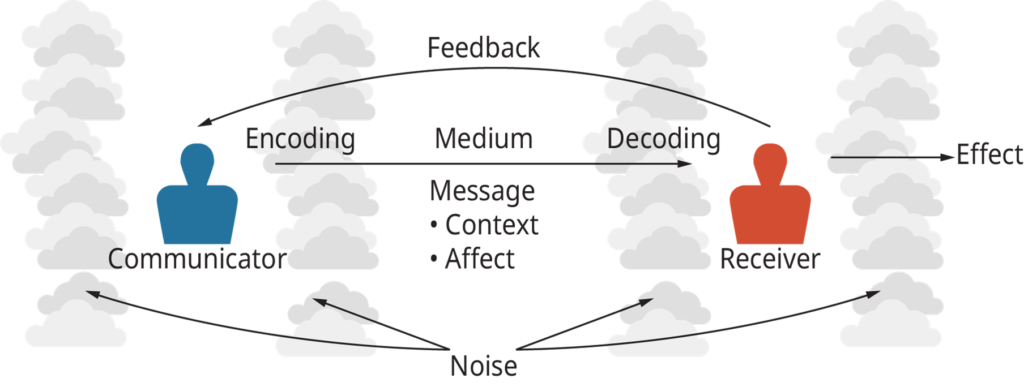
Exhibit 13.2 The Basic Communication Model (Attribution: Copyright Rice University, OpenStax, under CC-BY 4.0 license)
Encoding and Decoding
Two important aspects of this model are encoding and decoding. Encoding is the process by which individuals initiating the communication translate their ideas into a systematic set of symbols (language), either written or spoken. Encoding is influenced by the sender’s previous experiences with the topic or issue, her emotional state at the time of the message, the importance of the message, and the people involved. Decoding is the process by which the recipient of the message interprets it. The receiver attaches meaning to the message and tries to uncover its underlying intent. Decoding is also influenced by the receiver’s previous experiences and frame of reference at the time of receiving the message.
Feedback
Several types of feedback can occur after a message is sent from the communicator to the receiver. Feedback can be viewed as the last step in completing a communication episode and may take several forms, such as a verbal response, a nod of the head, a response asking for more information, or no response at all. As with the initial message, the response also involves encoding, medium, and decoding.
There are three basic types of feedback that occur in communication.2 These are informational, corrective, and reinforcing. In informational feedback, the receiver provides nonevaluative information to the communicator. An example is the level of inventory at the end of the month. In corrective feedback, the receiver responds by challenging the original message. The receiver might respond that it is not their responsibility to monitor inventory. In reinforcing feedback, the receiver communicated that they have clearly received the message and its intentions. For instance, the grade that you receive on a term paper (either positive or negative) is reinforcing feedback on your term paper (your original communication).
Noise
There is, however, a variety of ways that the intended message can get distorted. Factors that distort message clarity are noise. Noise can occur at any point along the model shown in Exhibit 13.2, including the decoding process. For example, a manager might be under pressure and issue a directive, “I want this job completed today, and I don’t care what it costs,” when the manager does care what it costs.
Concept Check
- Describe the communication process.
- Why is feedback a critical part of the communication process?
- What are some things that managers can do to reduce noise in communication?
13.2 Types of Communications in Organizations
- Know the types of communications that occur in organizations.
In the communication model described above, three types of communication can be used by either the communicator in the initial transmission phase or the receiver in the feedback phase. These three types are discussed next.
Oral Communication
This consists of all messages or exchanges of information that are spoken, and it’s the most prevalent type of communication.
Written Communication
This includes e-mail, texts, letters, reports, manuals, and annotations on sticky notes. Although managers prefer oral communication for its efficiency and immediacy, the increase in electronic communication is undeniable. As well, some managers prefer written communication for important messages, such as a change in a company policy, where precision of language and documentation of the message are important.
Nonverbal Communication
There is also the transformation of information without speaking or writing. Some examples of this are things such as traffic lights and sirens as well as things such as office size and placement, which connote something or someone of importance. As well, things such as body language and facial expression can convey either conscious or unconscious messages to others.

Exhibit 13.3 Body Language at a Meeting Your body language can send messages during a meeting. (Credit: Amtec Photos/ Flickr/ Attribution 2.0 Generic (CC BY 2.0))
Major Influences on Interpersonal Communication
Regardless of the type of communication involved, the nature, direction, and quality of interpersonal communication processes can be influenced by several factors.3
Social Influences
Communication is a social process, as it takes at least two people to have a communication episode. There is a variety of social influences that can affect the accuracy of the intended message. For examples, status barriers between employees at different levels of the organization can influence things such as addressing a colleague as at a director level as “Ms. Jones” or a coworker at the same level as “Mike.” Prevailing norms and roles can dictate who speaks to whom and how someone responds. Exhibit 13.4 illustrates a variety of communications that illustrate social influences in the workplace.
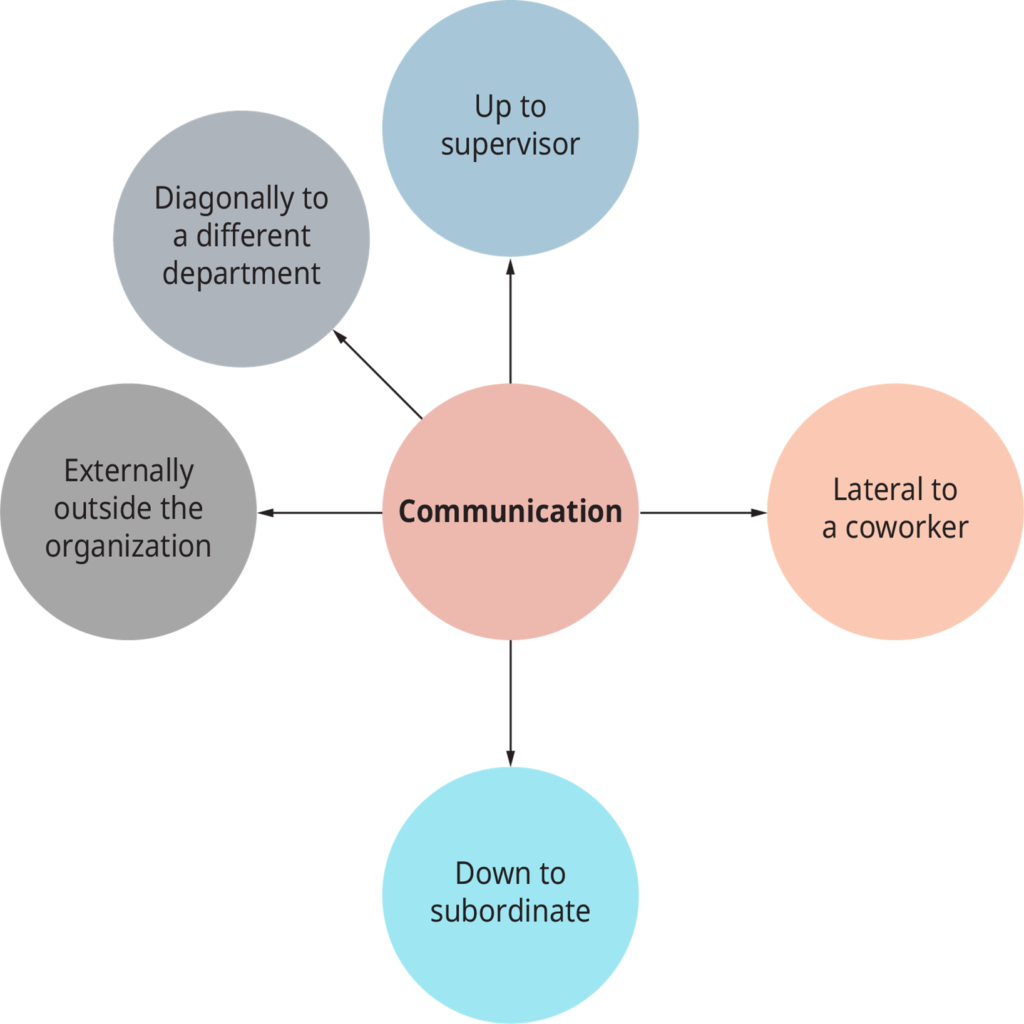
Exhibit 13.4 Patterns of Managerial Communication (Attribution: Copyright Rice University, OpenStax, under CC-BY 4.0 license)
In addition, the communication process is heavily influenced by perceptual processes. The extent to which an employee accurately receives job instructions from a manager may be influenced by her perception of the manager, especially if the job instructions conflict with her interest in the job or if they are controversial. If an employee has stereotyped the manager as incompetent, chances are that little that the manager says will be taken seriously. If the boss is well regarded or seen as influential in the company, everything that they say may be interpreted as important.
Interaction Involvement
Communication effectiveness can be influenced by the extent to which one or both parties are involved in conversation. This attentiveness is called interaction attentiveness or interaction involvement.4 If the intended receiver of the message is preoccupied with other issues, the effectiveness of the message may be diminished. Interaction involvement consists of three interrelated dimensions: responsiveness, perceptiveness, and attentiveness.
Organizational Design
The communication process can also be influenced by the design of the organization. It has often been argued to decentralize an organization because that will lead to a more participative structure and lead to improved communication in the organization. When messages must travel through multiple levels of an organization, the possibility of distortion can also occur, which would be diminished with more face-to-face communication.

Exhibit 13.5 Informal Communication in Organizations Smart managers understand that not all of a company’s influential relationships appear as part of the organization chart. A web of informal, personal connections exists between workers, and vital information and knowledge pass through this web constantly. Using social media analysis software and other tracking tools, managers can map and quantify the normally invisible relationships that form between employees at all levels of an organization. How might identifying a company’s informal organization help managers foster teamwork, motivate employees, and boost productivity? (Credit: Exeter/ flickr/ Attribution 2.0 Generic (CC BY 2.0))
Concept Check
- What are the three major types of communication?
- How can you manage the inflow of electronic communication?
- What are the major influences on organizational communication, and how can organizational design affect communication?
13.3 Barriers to Effective Communication – Noise
- Identify the sources of Noise.
We’ve already learned that Noise can interfere in the communication process at any point, but what can that noise be? Every time we talk or listen, there are things that get in the way of clear communication, things that interfere with the receiver getting the message from the sender. There are a number of common sources of noise that impact the effectiveness of our messages. Think about how these have impacted your own conversations with friends, classmates, or coworkers.
Physical Conditions
Sometimes “noise” is just exactly that—loud or distracting sounds that make it impossible to hear or concentrate. Or the general level of background noise can be so intense that it is hard to focus for long on one particular voice. A room may be so hot or so cold that people can’t get comfortable and cannot pay attention. Outside activities may be a distraction to those with a view out windows. Finally, it may be lunchtime or too close to quitting time to keep people focused. Fortunately, with some awareness and advance planning, physical barriers to effective communication are some of the easiest to overcome.
Filtering
Personal and particular experiences color how people view the world and how they communicate. A message sender sees the world through one set of filters (experiences and values) and the receiver sees it through a different set of filters. Each message has to pass, therefore, through at least two sets of filters. The more similar people are in lifestyle, experience, culture, and language, the more similar their mental filters are likely to be and the less distortion should occur. This is why people who come from very different social and economic situations than their audience must work extra hard to say exactly what they mean to avoid confusion. Also, the fewer people involved in the transmission of a message, the greater the chance that it will be received as the sender intended. In business, however, messages may be summarized by a manager and relayed through an administrative assistant who has clarified or edited the message. Messages exposed to many filters should be repeated in various ways to make sure they were understood as the sender intended.
Selective Perception
Selective perception is the tendency to either “under notice” or “over focus on” stimuli that cause emotional discomfort or contradict prior beliefs. For instance, some people live purposefully healthy lifestyles by frequently exercising and eating only nutritious food but still smoke cigarettes. Psychologists believe that they are selectively ignoring the evidence that smoking is dangerous to their health. They have chosen to disregard the information that would make them feel guilty or fearful about this habit. This is called perceptual defense. Selective perception can also be vigilant, meaning people are extra sensitive to things that are significant to them. If a manager doesn’t like a particular employee, for example, she may be super critical of that person’s behavior and notice every time he is a minute late to a meeting. On the other hand, a favorite employee coming late to work one morning might elicit concern that she had car trouble. Selective perception introduces bias into the communication process.
Information Overload
We have all been in situations when we felt that too much information was coming at us. When this happens, we feel overwhelmed and fear that we will not be able to retain any information at all. Sometimes it is not just the quantity of communication but the level that causes overload. If the message contains information that is new to the receiver, including processes or concepts that are not familiar, then the chances of overload increase greatly. The sender should break up the message into more palatable or digestible bits and reduce the amount of information that has to be absorbed at any one time. One technique is to make a high-level announcement and then follow it up later with more details. The sender has the primary responsibility to check that the receiver has understood the message. This means that a manager may have to adjust a message to reflect the various experiences of the employees. A new employee may need repeated explanations before beginning an operation, whereas an experienced employee may start rolling his eyes at the same old instructions.
Semantics/Jargon
Semantics is the study of the meaning of words and phrases. You might hear one person say to another “Let’s not argue semantics,” meaning he doesn’t want to get caught up in trivial and unimportant details or playing with words. But semantics is extremely important in effective communication. There are some semantic rules in English that may trip up non-native English speakers, such as the concept of subject-verb agreement and gender pronouns. When your audience involves people whose native language is not English or individuals of different educational backgrounds, messages need to be direct and clearly stated to help ensure they are understood.
Jargon can also lead to miscommunication. By definition, jargon is specialized language or terminology used within a particular profession, hobby or community. It’s not collectively known and used, but within our areas of specialty, these words may have high meaning and efficiency. That meaning and efficiency are lost to those who are not in the know! Be mindful of your audience. Tailor your language to the people you are talking to.
Denotation and Connotation
Confusion can also arise from the use of language by people from different educational levels, culture, and dialect. For instance, the terms lift and braces denote two entirely different meanings in the United States and in England. A Londoner might reasonably ask her partner if he was planning on wearing braces with his pants.
Some words have a connotation for one group of people that is not shared by another. “That’s sick!” could be a compliment or an insult, depending upon the listener. (You probably already know that slang does not belong in written business communications.) Fortunately for all of us, paying attention to the context of the message often reduces confusion. The meaning of homophones (buy, by, bye; meet, meat, mete; pair, pare, pear) and homographs (read, read; lead, lead) are often easily understood by their context or pronunciation.
Emotional Disconnects
Almost the first thing parents learn is never to try to have a rational discussion with a screaming toddler or an angry teenager. If they wait until the young person is more receptive to what they have to say, the odds of a successful conversation improve dramatically. Adults also experience emotional disconnects that affect the chance of successful communication. For example, when a person is feeling stressed or anxious, an expressed concern is more likely to be interpreted as criticism. Constructive criticism made while an employee is emotionally fragile may be perceived as a personal attack. If possible, it is better to postpone a communication if there is a strong likelihood that the intended receiver will misinterpret it because of his emotional state.
13.5 The Major Channels of Management Communication Are Talking, Listening, Reading, and Writing
- Know why talking, listening, reading, and writing are vital to managing effectively.
The major channels of managerial communication displayed in Exhibit 13.6 are talking, listening, reading, and writing. Among these, talking is the predominant method of communicating, but as e-mail and texting increase, reading and writing are increasing. Managers across industries, according to Deirdre Borden, spend about 75% of their time in verbal interaction. Those daily interactions include the following.
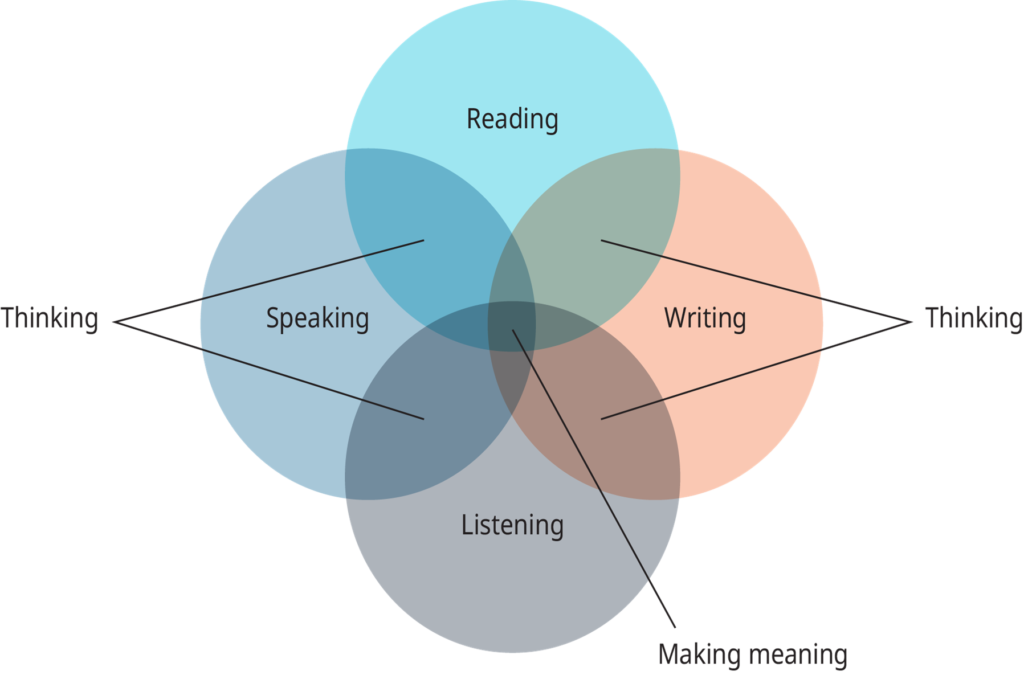
Exhibit 13.6 Reading, Writing, Speaking, and Listening: How They Help in Creating Meaning (Attribution: Copyright Rice University, OpenStax, under CC-BY 4.0 license)
One-on-One Conversations
Increasingly, managers find that information is passed orally, often face-to-face in offices, hallways, conference rooms, cafeterias, restrooms, athletic facilities, parking lots, and literally dozens of other venues. An enormous amount of information is exchanged, validated, confirmed, and passed back and forth under highly informal circumstances.
Telephone Conversations
Managers spend an astounding amount of time on the telephone these days. Curiously, the amount of time per telephone call is decreasing, but the number of calls per day is increasing. With the nearly universal availability of cellular and satellite telephone service, very few people are out of reach of the office for very long. The decision to switch off a cellular telephone, in fact, is now considered a decision in favor of work-life balance.
Video Teleconferencing
Bridging time zones as well as cultures, videoconferencing facilities make direct conversations with employees, colleagues, customers, and business partners across the nation or around the world a simple matter. Carrier Corporation, the air-conditioning manufacturer, is now typical of firms using desktop videoconferencing to conduct everything from staff meetings to technical training. Engineers at Carrier’s Farmington, Connecticut, headquarters can hook up with service managers in branch offices thousands of miles away to explain new product developments, demonstrate repair techniques, and update field staff on matters that would, just recently, have required extensive travel or expensive, broadcast-quality television programming. Their exchanges are informal, conversational, and not much different than they would be if the people were in the same room.18
Presentations to Small Groups
Managers frequently find themselves making presentations, formal and informal, to groups of three to eight people for many different reasons: they pass along information given to them by executives, they review the status of projects in process, and they explain changes in everything from working schedules to organizational goals. Such presentations are sometimes supported by overhead transparencies or printed outlines, but they are oral in nature and retain much of the conversational character of one-to-one conversations.
Public Speaking to Larger Audiences
Most managers are unable to escape the periodic requirement to speak to larger audiences of several dozen or, perhaps, several hundred people. Such presentations are usually more formal in structure and are often supported by PowerPoint or Prezi software that can deliver data from text files, graphics, photos, and even motion clips from streaming video. Despite the more formal atmosphere and sophisticated audio-visual support systems, such presentations still involve one manager talking to others, framing, shaping, and passing information to an audience.
According to Werner and others who study the communication habits of postmodern business organizations, managers are involved in more than just speeches and presentations from the dais or teleconference podium. They spend their days in meetings, on the telephone, conducting interviews, giving tours, supervising informal visits to their facilities, and at a wide variety of social events.20

Exhibit 13.7 Public speaking Public speaking is often a terrifying but crucial skill for managers. (Credit: Mike Mozart/ flickr/ Attribution 2.0 Generic (CC BY 2.0))
The Role of Writing
Writing plays an important role in the life of any organization. In some organizations, it becomes more important than in others. At Procter & Gamble, for example, brand managers cannot raise a work-related issue in a team meeting unless the ideas are first circulated in writing. For P&G managers, this approach means explaining their ideas in explicit detail in a standard one-to-three-page memo, complete with background, financial discussion, implementation details, and justification for the ideas proposed.
Other organizations are more oral in their traditions—3M Canada is a “spoken” organization—but the fact remains: the most important projects, decisions, and ideas end up in writing. Writing also provides analysis, justification, documentation, and analytic discipline, particularly as managers approach important decisions that will affect the profitability and strategic direction of the company.
Writing is a career sifter. If managers demonstrate their inability to put ideas on paper in a clear, unambiguous fashion, they’re not likely to last. Stories of bad writers who’ve been shown the door early in their careers are legion. Managers’ principal objective, at least during the first few years of their career, is to keep their name out of such stories. Remember: those who are most likely to notice the quality and skill in managers’ written documents are the very people most likely to matter to managers’ future.
Managers do most of their own writing and editing. The days when managers could lean back and thoughtfully dictate a letter or memo to a skilled secretarial assistant are mostly gone. Some senior executives know how efficient dictation can be, especially with a top-notch administrative assistant taking shorthand, but how many managers have that advantage today? Very few, mostly because buying a computer and printer is substantially cheaper than hiring another employee. Managers at all levels of most organizations draft, review, edit, and dispatch their own correspondence, reports, and proposals.
Documents take on lives of their own. Once it’s gone from the manager’s desk, it isn’t theirs anymore. When they sign a letter and put it in the mail, it’s no longer their letter—it’s the property of the person or organization it was sent to. As a result, the recipient is free to do as she sees fit with the writing, including using it against the sender. If the ideas are ill-considered or not well expressed, others in the organization who are not especially sympathetic to the manager’s views may head for the copy machine with the manager’s work in hand. The advice for managers is simple: do not mail the first draft, and do not ever sign your name to a document you are not proud of.
Information Is Socially Constructed
If we are to understand just how important human discourse is in the life of a business, several points seem especially important.
Information is created, shared, and interpreted by people. Meaning is a truly human phenomenon. An issue is only important if people think it is. Facts are facts only if we can agree upon their definition. Perceptions and assumptions are as important as truth itself in a discussion about what a manager should do next.22 Information never speaks for itself. It is not uncommon for a manager to rise to address a group of her colleagues and say, “The numbers speak for themselves.” Frankly, the numbers never speak for themselves. They almost always require some sort of interpretation, some sort of explanation or context. Do not assume that others see the facts in the same way managers do, and never assume that what is seen is the truth. Others may see the same set of facts or evidence but may not reach the same conclusions. Few things in life are self-explanatory.
Context always drives meaning. The backdrop to a message is always of paramount importance to the listener, viewer, or reader in reaching a reasonable, rational conclusion about what they see and hear. What’s in the news these days as we take up this subject? What moment in history do we occupy? What related or relevant information is under consideration as this new message arrives? We cannot possibly derive meaning from one message without considering everything else that surrounds it.
A messenger always accompanies a message. It is difficult to separate a message from its messenger. We often want to react more to the source of the information than we do to the information itself. That’s natural and entirely normal. People speak for a reason, and we often judge their reasons for speaking before analyzing what they have to say. Keep in mind that, in every organization, message recipients will judge the value, power, purpose, intent, and outcomes of the messages they receive by the source of those messages as much as by the content and intent of the messages themselves. If the messages managers send are to have the impact hoped for, they must come from a source the receiver knows, respects, and understands.
Managers’ Task as Professionals
As a professional manager, the first task is to recognize and understand one’s strengths and weaknesses as a communicator. Until these communication tasks at which one is most and least skilled are identified, there will be little opportunity for improvement and advancement.
Foremost among managers’ goals should be to improve existing skills. Improve one’s ability to do what is done best. Be alert to opportunities, however, to develop new skills. Managers should add to their inventory of abilities to keep themselves employable and promotable.
Two other suggestions come to mind for improving managers’ professional standing. First, acquire a knowledge base that will work for the years ahead. That means speaking with and listening to other professionals in their company, industry, and community. They should be alert to trends that could affect their company’s products and services, as well as their own future.
It also means reading. Managers should read at least one national newspaper each day, including the Wall Street Journal, the New York Times, or the Financial Times, as well as a local newspaper. Their reading should include weekly news magazines, such as U.S. News & World Report, Bloomberg’s Business Week, and the Economist. Subscribe to monthly magazines such as Fast Company and Fortune. And they should read at least one new hardcover title a month. A dozen books each year is the bare minimum on which one should depend for new ideas, insights, and managerial guidance.
Managers’ final challenge is to develop the confidence needed to succeed as a manager, particularly under conditions of uncertainty, change, and challenge.
Concept Check
- What are the four components of communication discussed in this section?
- Why is it important to understand your limitations in communicating to others and in larger groups?
Key Terms
communicator
The individual, group, or organization that needs or wants to share information with another individual, group, or organization.
decoding
Interpreting and understanding and making sense of a message.
encoding
Translating a message into symbols or language that a receiver can understand.
figurehead role
A necessary role for a manager who wants to inspire people within the organization to feel connected to each other and to the institution, to support the policies and decisions made on behalf of the organization, and to work harder for the good of the institution.
interaction attentiveness/ interaction involvement
A measure of how the receiver of a message is paying close attention and is alert or observant.
noise
Anything that interferes with the communication process.
receiver
The individual, group, or organization for which information is intended.
Summary of Learning Outcomes
13.1 The Process of Managerial Communication
- Understand and describe the communication process.
The basic model of interpersonal communication consists of an encoded message, a decoded message, feedback, and noise. Noise refers to the distortions that inhibit message clarity.
13.2 Types of Communications in Organizations
- Know the types of communications that occur in organizations.
Interpersonal communication can be oral, written, or nonverbal. Body language refers to conveying messages to others through such techniques as facial expressions, posture, and eye movements.
13.3 Noise in Communication: Common Sources
Noise refers to anything that disrupts the clarity or effectiveness of a message between sender and receiver. It can appear in various forms:
- Physical Conditions: External distractions like loud sounds, uncomfortable environments, or timing issues can hinder attention and comprehension.
- Filtering: Messages pass through personal “filters” shaped by experience, culture, and values, which can cause distortion or misunderstanding.
- Selective Perception: People may unconsciously focus on or ignore messages based on personal biases, emotional responses, or prior beliefs.
- Information Overload: Excessive or complex information can overwhelm recipients, leading to confusion and missed details.
- Semantics and Jargon: Misinterpretation can result from unclear language, unfamiliar terms, or linguistic differences, especially across cultures or professions.
- Denotation and Connotation: Words may have different meanings or emotional undertones depending on the audience’s background.
- Emotional Disconnects: Strong emotions, such as stress or anger, can distort how messages are sent, received, or interpreted.
Understanding these sources helps improve communication by encouraging clarity, empathy, and strategic message delivery.
13.5 The Major Channels of Management Communication Are Talking, Listening, Reading, and Writing.
- Describe the roles that managers perform in organizations.
There are special communication roles that can be identified. Managers may serve as gatekeepers, liaisons, or opinion leaders. They can also assume some combination of these roles. It is important to recognize that communication processes involve people in different functions and that all functions need to operate effectively to achieve organizational objectives.
Chapter Review Questions
- Describe the communication process.
- Why is feedback a critical part of the communication process?
- What are some things that managers can do to reduce noise in communication?
- Describe the various individual communication roles in organizations.
- Which communication roles are most important in facilitating managerial effectiveness?
- Identify barriers to effective communication.
- How can barriers to effective communication be overcome by managers?
Management Skills Application Exercises
The e-mail below is not written as clearly or concisely as it could be. In addition, it may have problems in organization or tone or mechanical errors. Rewrite it so it is appropriate for the audience and purpose. Correct grammatical and mechanical errors. Finally, add a subject line to each.
E-Mail 1
To: Employees of The Enormously Successful Corporation
From: CEO of The Enormously Successful Corporation
Subject:
Stop bringing bottled soft drinks, juices and plastic straws to work. Its an environment problem that increases our waste and the quality of our water is great. People don’t realize how much wasted energy goes into shipping all that stuff around, and plastic bottles, aluminum cans and straws are ruining our oceans and filling land fills. Have you seen the floating island of waste in the Pacific Ocean? Some of this stuff comes from other countries like Canada Dry I think is from canada and we are taking there water and Canadians will be thirsty. Fancy drinks isn’t as good as the water we have and tastes better anyway.
Write a self-evaluation that focuses specifically on your class participation in this course. Making comments during class allows you to improve your ability to speak extemporaneously, which is exactly what you will have to do in all kinds of business situations (e.g., meetings, asking questions at presentations, one-on-one conversations). Thus, write a short memo (two or three paragraphs) in which you describe the frequency with which you make comments in class, the nature of those comments, and what is easy and difficult for you when it comes to speaking up in class.
If you have made few (or no) comments during class, this is a time for us to come up with a plan to help you overcome your shyness. Our experience is that as soon as a person talks in front of a group once or twice, it becomes much easier—so we need to come up with a way to help you break the ice.
Finally, please comment on what you see as the strengths and weaknesses of your discussions and presentations in this class.
Managerial Decision Exercises
Ginni Rometty is the CEO of IBM. Shortly after taking on the role of CEO and being frustrated by the progress and sales performance, Rometty released a five-minute video to all 400,000 plus IBM employees criticizing the lack of securing deals to competitors and lashed out at the sales organization for poor sales in the preceding quarter. Six months later, Rometty sent another critical message, this time via e-mail. How effective will the video and e-mail be in communicating with employees? How should she follow up to these messages?
Social media, such as Facebook, is now widespread. Place yourself as a manager that has just received a “friend” request from one of your direct reports. Do you accept, reject, or ignore the request? Why, and what additional communication would you have regarding this with the employee?
Critical Thinking Case
Facebook, Inc.
Facebook has been in the news with criticism of its privacy policies, sharing customer information with Fusion GPS, and criticism regarding the attempts to influence the 2016 election. In March 2014, Facebook released a study entitled “Experimental evidence of massive-scale emotional contagion through social networks.” It was published in the Proceedings of the National Academy of Sciences (PNAS), a prestigious, peer-reviewed scientific journal. The paper explains how social media can readily transfer emotional states from person to person through Facebook’s News Feed platform. Facebook conducted an experiment on members to see how people would respond to changes in a percentage of both positive and negative posts. The results suggest that emotional contagion does occur online and that users’ positive expressions can generate positive reaction, while, in turn, negative expression can generate negative reaction.
Facebook has two separate value propositions aimed at two different markets with entirely different goals.
Originally, Facebook’s main market was its end users—people looking to connect with family and friends. At first, it was aimed only at college students at a handful of elite schools. The site is now open to anyone with an Internet connection. Users can share status updates and photographs with friends and family. And all of this comes at no cost to the users.
Facebook’s other major market is advertisers, who buy information about Facebook’s users. The company regularly gathers data about page views and browsing behavior of users in order to display targeted advertisements to users for the benefit of its advertising partners.
The value proposition of the Facebook News Feed experiment was to determine whether emotional manipulation would be possible through the use of social networks. This clearly could be of great value to one of Facebook’s target audiences—its advertisers.
The results suggest that the emotions of friends on social networks influence our own emotions, thereby demonstrating emotional contagion via social networks. Emotional contagion is the tendency to feel and express emotions similar to and influenced by those of others. Originally, it was studied by psychologists as the transference of emotions between two people.
According to Sandra Collins, a social psychologist and University of Notre Dame professor of management, it is clearly unethical to conduct psychological experiments without the informed consent of the test subjects. While tests do not always measure what the people conducting the tests claim, the subjects need to at least know that they are, indeed, part of a test. The subjects of this test on Facebook were not explicitly informed that they were participating in an emotional contagion experiment. Facebook did not obtain informed consent as it is generally defined by researchers, nor did it allow participants to opt out.
When information about the experiment was released, the media response was overwhelmingly critical. Tech blogs, newspapers, and media reports reacted quickly.
Josh Constine of TechCrunch wrote:
“ . . . there is some material danger to experiments that depress people. Some people who are at risk of depression were almost surely part of Facebook’s study group that were shown a more depressing feed, which could be considered dangerous. Facebook will endure a whole new level of backlash if any of those participants were found to have committed suicide or had other depression-related outcomes after the study.”
The New York Times quoted Brian Blau, a technology analyst with the research firm Gartner, “Facebook didn’t do anything illegal, but they didn’t do right by their customers. Doing psychological testing on people crosses the line.” Facebook should have informed its users, he said. “They keep on pushing the boundaries, and this is one of the reasons people are upset.”
While some of the researchers have since expressed some regret about the experiment, Facebook as a company was unapologetic about the experiment. The company maintained that it received consent from its users through its terms of service. A Facebook spokesperson defended the research, saying, “We do research to improve our services and make the content people see on Facebook as relevant and engaging as possible. . . . We carefully consider what research we do and have a strong internal review process.”
With the more recent events, Facebook is changing the privacy settings but still collects an enormous amount of information about its users and can use that information to manipulate what users see. Additionally, these items are not listed on Facebook’s main terms of service page. Users must click on a link inside a different set of terms to arrive at the data policy page, making these terms onerous to find. This positioning raises questions about how Facebook will employ its users’ behaviors in the future.
Critical Thinking Questions
- How should Facebook respond to the 2014 research situation? How could an earlier response have helped the company avoid the 2018 controversies and keep the trust of its users?
- Should the company promise to never again conduct a survey of this sort? Should it go even further and explicitly ban research intended to manipulate the responses of its users?
- How can Facebook balance the concerns of its users with the necessity of generating revenue through advertising?
- What processes or structures should Facebook establish to make sure it does not encounter these issues again?
- Respond in writing to the issues presented in this case by preparing two documents: a communication strategy memo and a professional business letter to advertisers.
Sources: Kramer, Adam; Guillory, Jamie; and Hancock, Jeffrey, “Experimental evidence of massive scale emotional contagion through social networks,” PNAS (Proceedings of the National Academy of Sciences of the United States of America). March 25, 2014 http://www.pnas.org/content/111/24/8788.full; Laja, Peep. “Useful Value Proposition Examples (and How to Create a Good One), ConversionXL, 2015 http://conversionxl.com/value-proposition-examples-how-to-create/; Yadav, Sid. “Facebook – The Complete Biography,” Mashable, Aug. 25, 2006. http://mashable.com/2006/08/25/facebook-profile/#orb9TmeYHiqK; Felix, Samantha, “This Is How Facebook Is Tracking Your Internet Activity,” Business Insider, Sept. 9, 2012 http://www.businessinsider.com/this-is-how-facebook-is-tracking-your-internet-activity-2012-9
Chapter Attributions:
Principles of Management by Bright, D. S., Cortes, A. H., Hartmann, E., Parboteeah, K. P., Pierce, J. L., Reece, M., Shah, A., Terjesen, S., Weiss, J., White, M. A., Gardner, D. G., Lambert, J., Leduc, L. M., Leopold, J., Muldoon, J., & O’Rourke, J. S. Available at OpenStax and licensed under CC BY 4.0.
Waymaker Principles of Management by Lumen Learning. Available at Lumen Learning and licensed under CC BY 4.0.